
Digital Transformation Key Insights and Statistics That Predict the Future
Digital transformation is no longer just an option—it’s a must for businesses aiming to stay relevant.
But what exactly is digital transformation? According to McKinsey, it’s about rethinking and redesigning how an organization operates, with the aim of creating value by consistently implementing technology at scale. It’s not a one-time project; rather, it’s an ongoing journey that requires a clear strategy, focused efforts in key areas, and the right capabilities to succeed. For many leaders, this transformation will be a central part of their work for years to come.
Why does it matter? The reasons are straightforward: customers expect more, competition is tougher, and businesses need to work smarter to keep up. Companies that embrace digital transformation are better equipped to adapt, innovate, and grow in a world that’s constantly changing.
But how big is this shift, and what do the numbers say about its impact?
Let’s explore the facts, statistics, and insights that show just how transformative digital transformation really is—and what it means for businesses now and in the future.
The Digital Transformation Market: A Growing Market
The numbers speak volumes about the rapid growth of digital transformation. According to Research and Market, the global digital transformation market is set to expand from $911.2 billion in 2024 to a staggering $3.28 trillion by 2030, with an impressive compound annual growth rate (CAGR) of 23.9%.
This explosive growth reflects the increasing reliance on technology across industries as businesses invest heavily in tools and strategies to stay competitive, agile, and future-ready.

What’s Driving the Growth?
Customizable Cloud Solutions – Tailored, scalable, and essential for modern business.
IoT-Powered Predictive Maintenance – Reducing downtime and improving efficiency across industries.
Advancements in Fintech and Digital Payments – Enabling seamless, global transactions.
Adoption Trend: The Acceleration of Digital Transformation
The pace of digital transformation is accelerating, and the numbers back it up. According to Gartner, 72% of Data & Analytics Leaders are actively driving digital transformation initiatives. Within this group:
24% hold leadership positions.
48% are involved in implementing data-driven strategies for a competitive edge.

Image Source.
COVID-19 as a Catalyst
The pandemic accelerated digital adoption at an unprecedented rate. According to Twilio:
97% of companies reported a significant boost in their transformation efforts.
68% stated that COVID-19 greatly sped up their digital transformation.
The Rising Investment in Transformation
KPMG reveals that almost one-fifth of companies across key sectors—and 23% of large enterprises—consider themselves digital leaders, fully committed to a strategic focus on digital transformation.
Meanwhile, IDC forecasts that global spending on digital transformation (DX) will reach nearly $4 trillion by 2027, driven by advancements in artificial intelligence (AI) and generative AI. According to the IDC Worldwide Digital Transformation Spending Guide, the DX market is expected to grow at a compound annual growth rate (CAGR) of 16.2% between 2022 and 2027.
As organizations increasingly prioritize digitalization, digital transformation investments are set to account for a significant portion of overall ICT spending—potentially reaching or even exceeding two-thirds of all ICT budgets by 2027.
The Benefits: Why Digital Transformation Is Essential
The advantages of digital transformation are clear and impactful. According to The Business Transformation Network (BTN), businesses report three key areas of improvement:
Improved Operational Efficiency (40%)
Faster Time-to-Market (36%)
Better Customer Experience (35%)
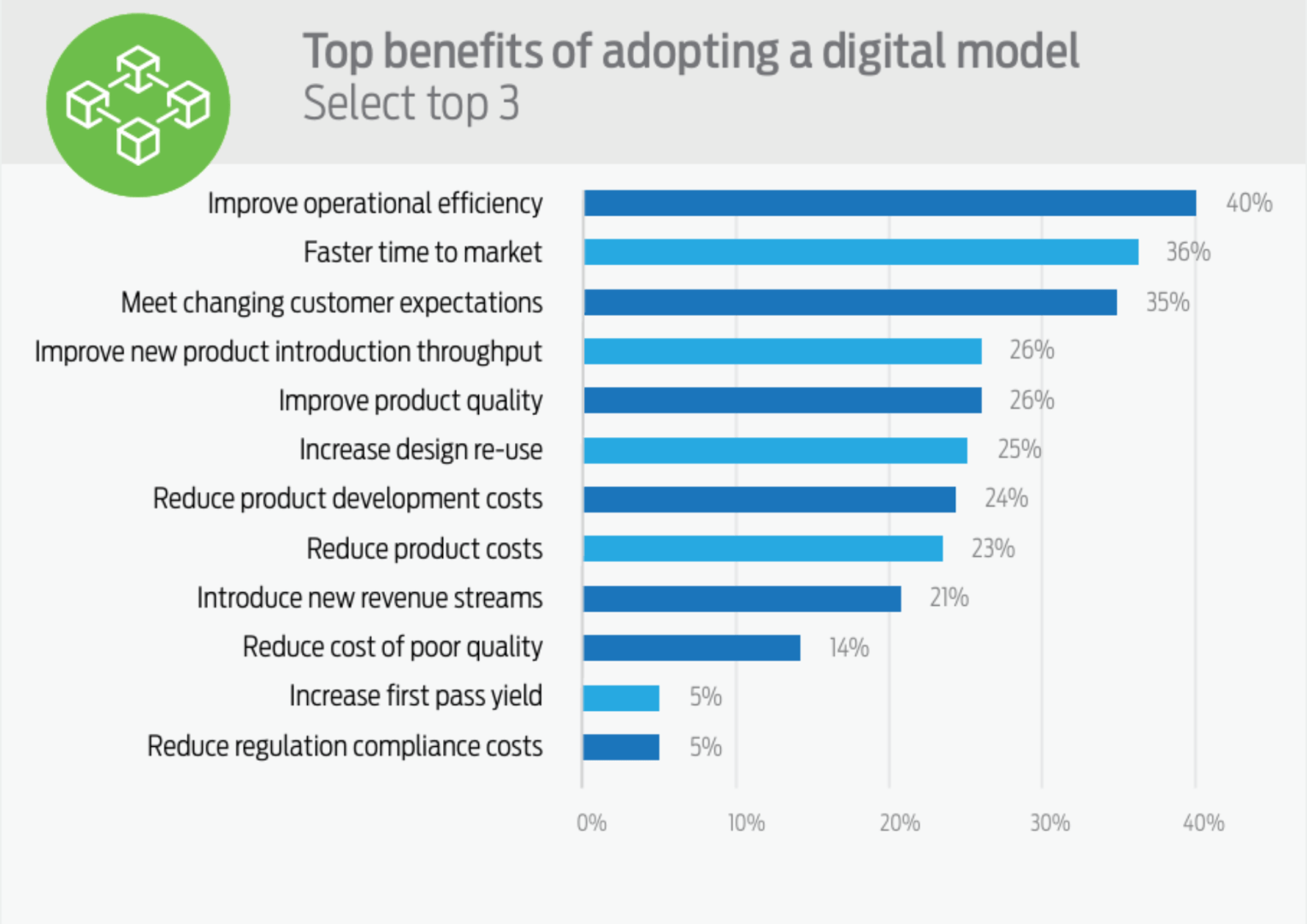
Image Source.
More Reasons to Invest in Digital Transformation
The case for digital transformation grows stronger with every success story. A survey from Baker McKenzie highlights the top three benefits organizations experience from implementing digital transformation:
- Enhanced Cybersecurity and IT Security (87%)
- Reduced Costs and Enhanced Efficiency (74%)
- Improve Business Systems and Processes (58%)
These results underscore the far-reaching impact of digital transformation, touching everything from security to operational performance.

Image Source.
The Challenges: Why Do Some Efforts Fall Short?
While digital transformation holds immense promise, not all initiatives deliver the desired results. In fact, a staggering 84% of digital transformations fail to meet their goals. So, what’s holding organizations back? Let’s break down the key challenges:
High Failure Rates: According to BCG, two out of three digital transformation efforts fail to achieve their intended outcomes.
Budgetary Constraints: Deloitte reports that
56% of IT budgets are tied up in maintenance, leaving little room for innovation.
The Struggle to Sustain Transformation Success
McKinsey’s research highlights a sobering reality: the long-term impact of transformation projects is “rarer than one may think.”
While 56% of organizations report achieving most or all of their transformation goals, only 12% sustain these results for more than three years.
A significant portion of the potential value is lost during the execution and sustainability phases. On average, organizations lose 42% of the expected financial benefits during the later stages of large-scale transformation efforts.
This underscores the challenges of not just launching digital transformation initiatives but also maintaining their momentum and impact over time.
What’s Next for Digital Transformation (DX)?
The future of digital transformation is being shaped by innovative technologies that are set to change how businesses operate.
Here’s what to expect:
- Rise of AI Agentic Systems: Gartner predicted that by 2028, 33% of enterprise software applications will include agentic AI, up from less than 1% in 2024, enabling 15% of day-to-day work decisions to be made autonomously.
- AI-Driven Investment: IDC forecasts global Digital Transformation (DX) spending to reach nearly $4 trillion by 2027, driven by AI and Generative AI investments. The market is expected to grow at a CAGR of 16.2% from 2022 to 2027, with DX potentially accounting for two-thirds of all ICT spending by 2027.
- AI-Empowered Citizen Developers: Digital transformation is shifting beyond IT departments, with responsibility spreading across organizations. According to MIT Sloan, AI-powered citizen developers play a key role in addressing the shortage of centralized IT personnel, helping accelerate digital capabilities and innovation.
These trends highlight the ongoing evolution of digital transformation—and the opportunities it offers for businesses willing to adapt and innovate.
How Joget Helps Overcome Digital Transformation Challenges
With so many challenges, how can companies ensure a successful digital transformation? Platforms like Joget Application & Integration Fabric offer a way forward by addressing common pain points and enabling businesses to innovate effectively. Here’s how Joget helps:
Speed and Cost Efficiency: It accelerates application development, lowers costs, and empowers non-IT teams to create solutions, reducing dependency on technical experts.
Simplified Innovation: By streamlining complex processes, Joget allows companies to focus on driving efficiency and advancing their digital goals.
Unified User Experience: Joget wraps legacy, core, and new complex applications in a custom business-friendly interface that can seamlessly pull and push data, ensuring smooth operations across the board.
AI-Driven Solutions: Equipped with
AI capabilities, Joget Intelligence supports innovation while maintaining robust security and governance.
Curious to see how Joget can support your digital transformation journey?
Explore Real-World Business Transformation Stories with Joget
Like this:
Like Loading...
Related