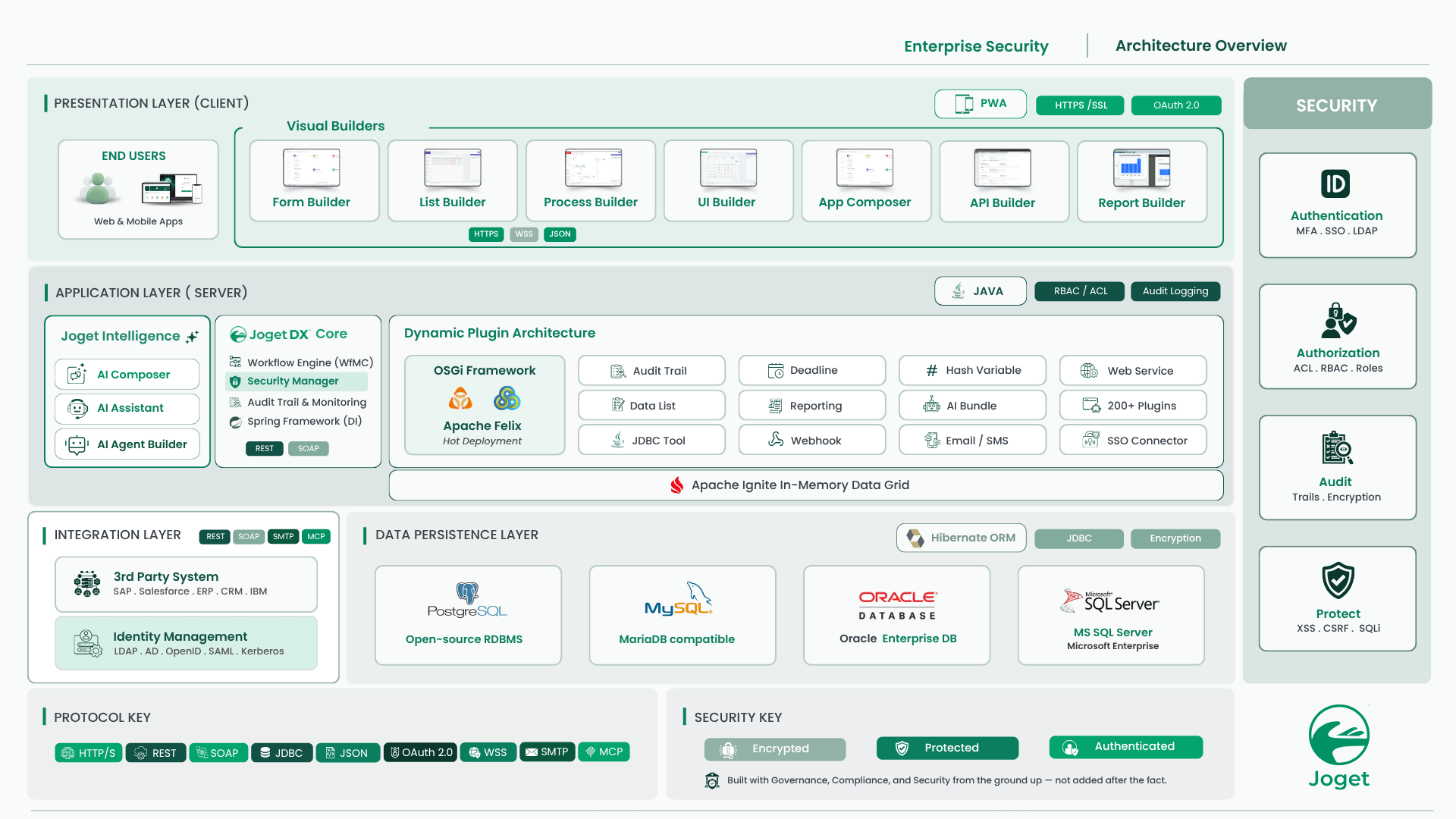
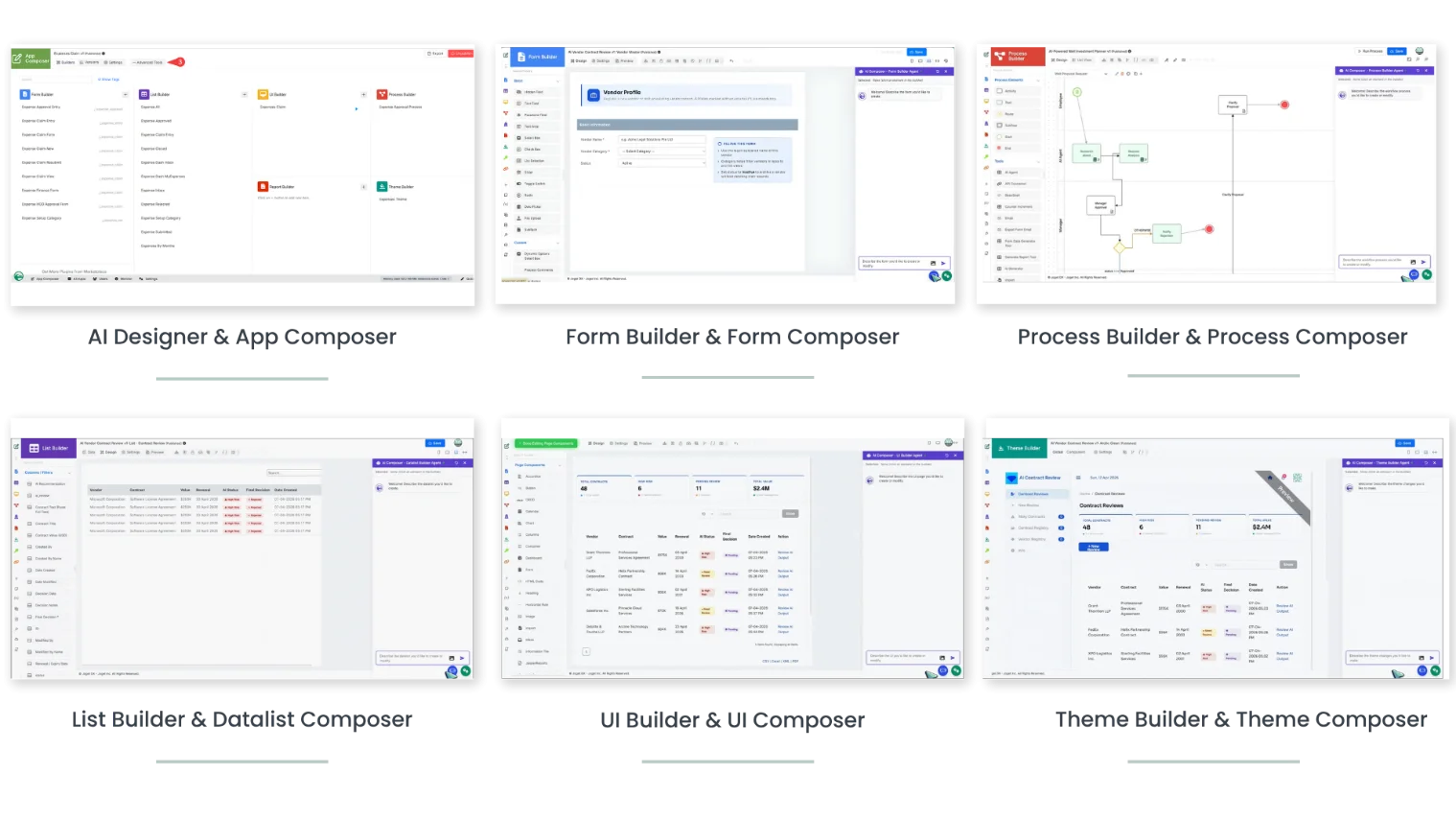
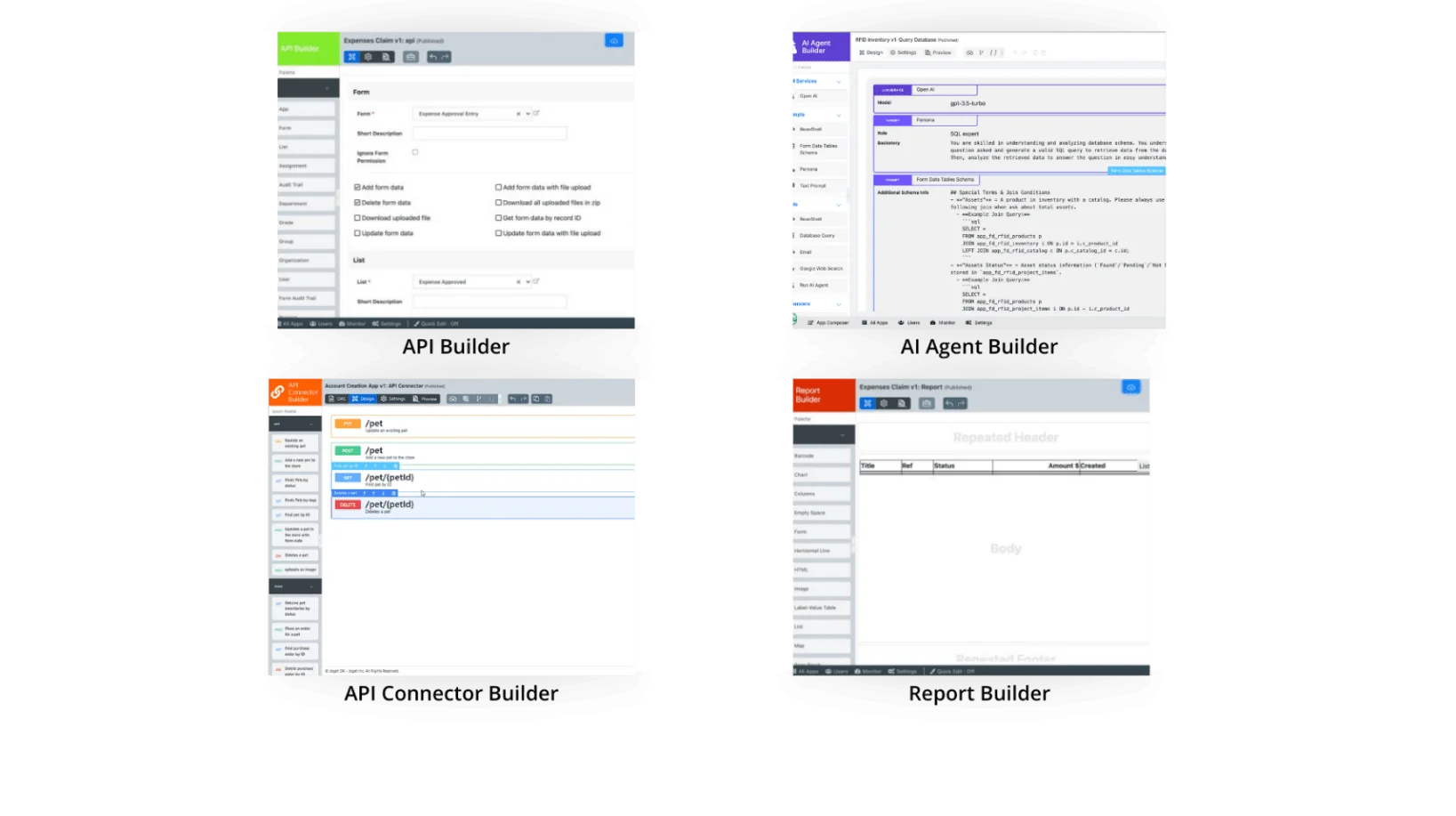
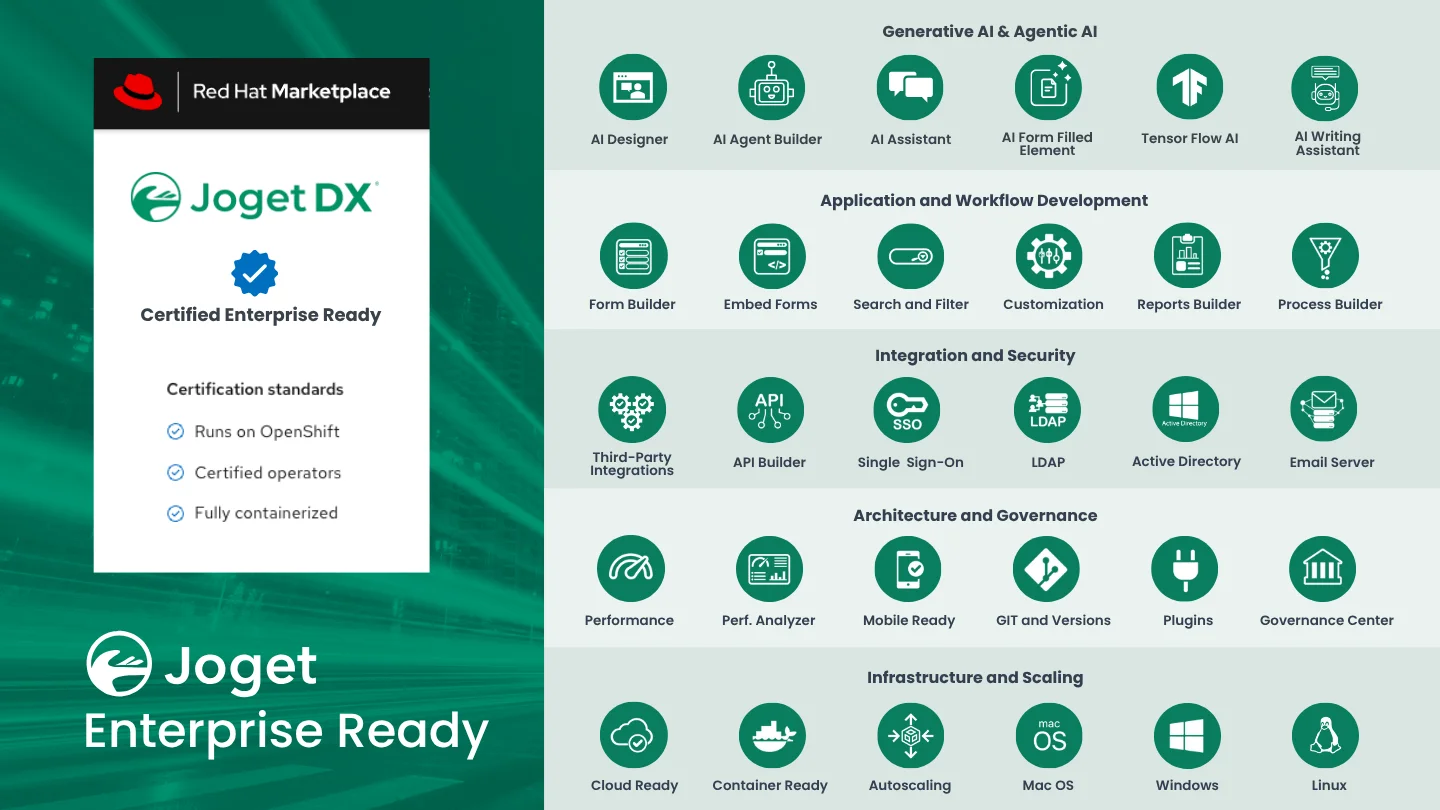
The diagram below provides an overview of the key components of the Joget platform.
How can I quickly build and deploy applications with Joget?
Quickly build and deploy applications with our step-by-step quick start guide.
Video Tutorials
Explore video tutorials on APIs, app development, and platform features.
Core Architecture
Our platform is built on a modular architecture that enables flexibility and scalability. Understanding these core components will help you make the most of our platform.
Section Title
Section description
What are the key characteristics of apps built on Joget?
Apps built on Joget are web-based, responsive and accessible from any desktop or mobile device, with automatic Progressive Web Apps compliance. The apps are also accessible via native mobile apps published in the Apple App Store and Google Play Store.
Apps are executed directly on the platform, without relying on code-generation. This facilitates faster changes and requires less maintenance without the need to maintain generated code.
Joget Intelligence
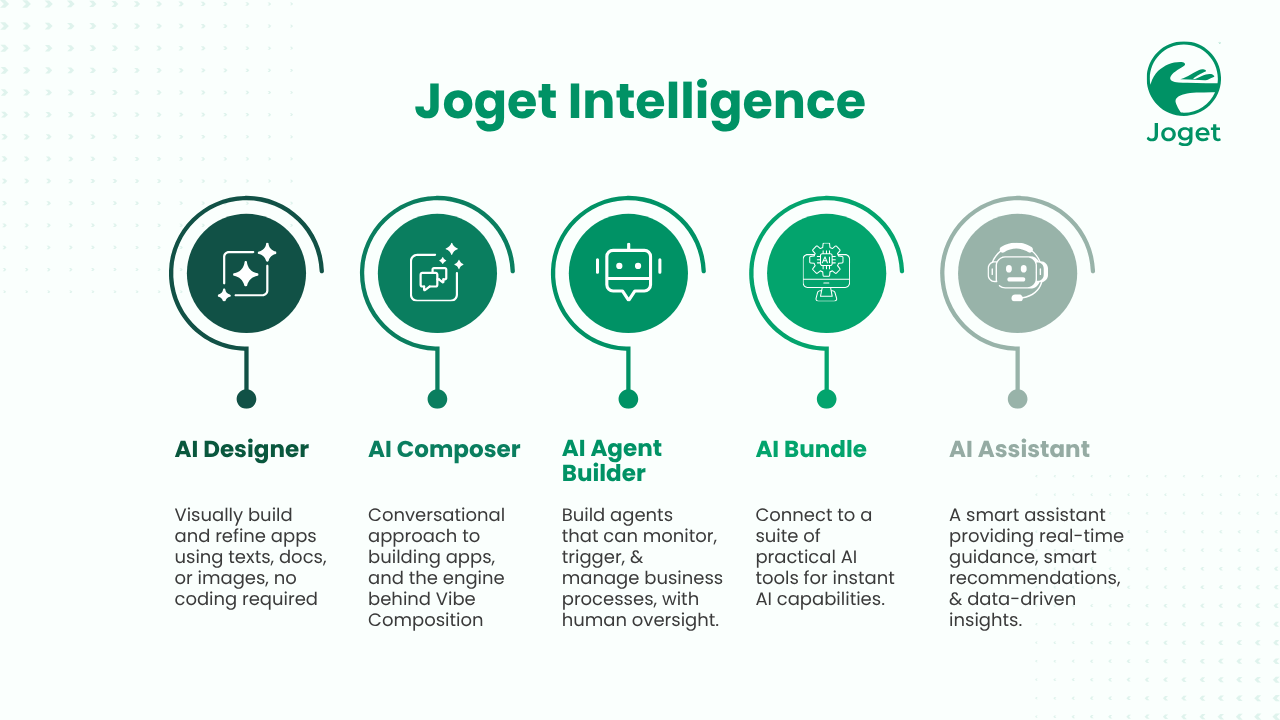
With Joget Intelligence, users can leverage cutting-edge Generative and Agentic AI capabilities:
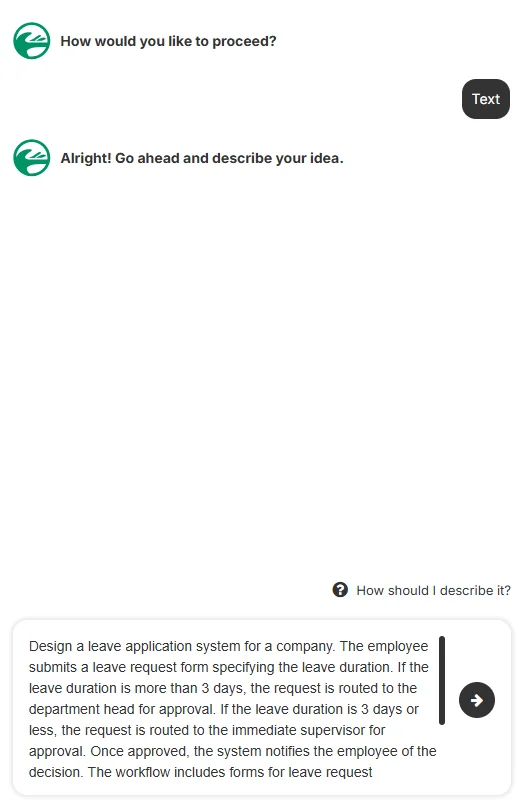
- AI Designer to visually build and refine applications using natural language, documents, or images.
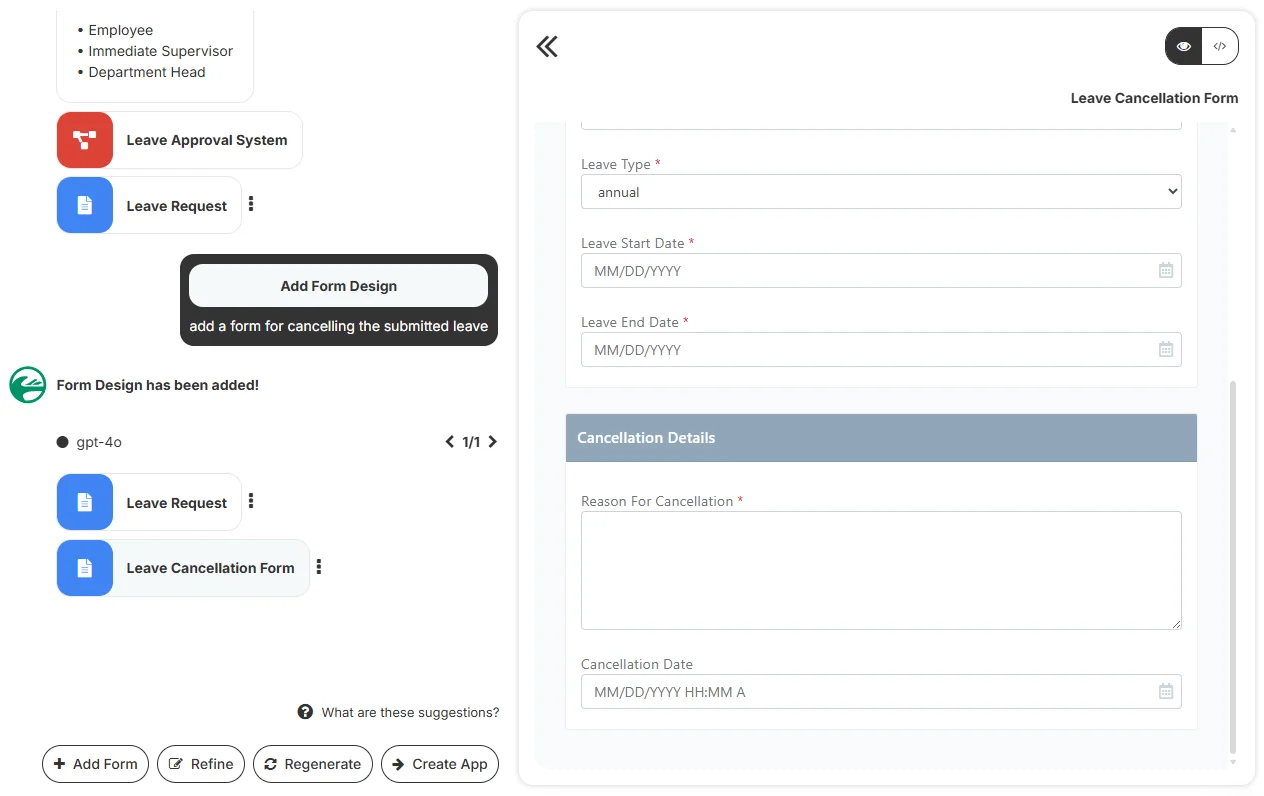
- AI Composer to compose applications: forms, lists, workflows, UI, and themes within their respective visual builders. AI Composer is also the engine powering Vibe Composition, a modern AI app development approach.
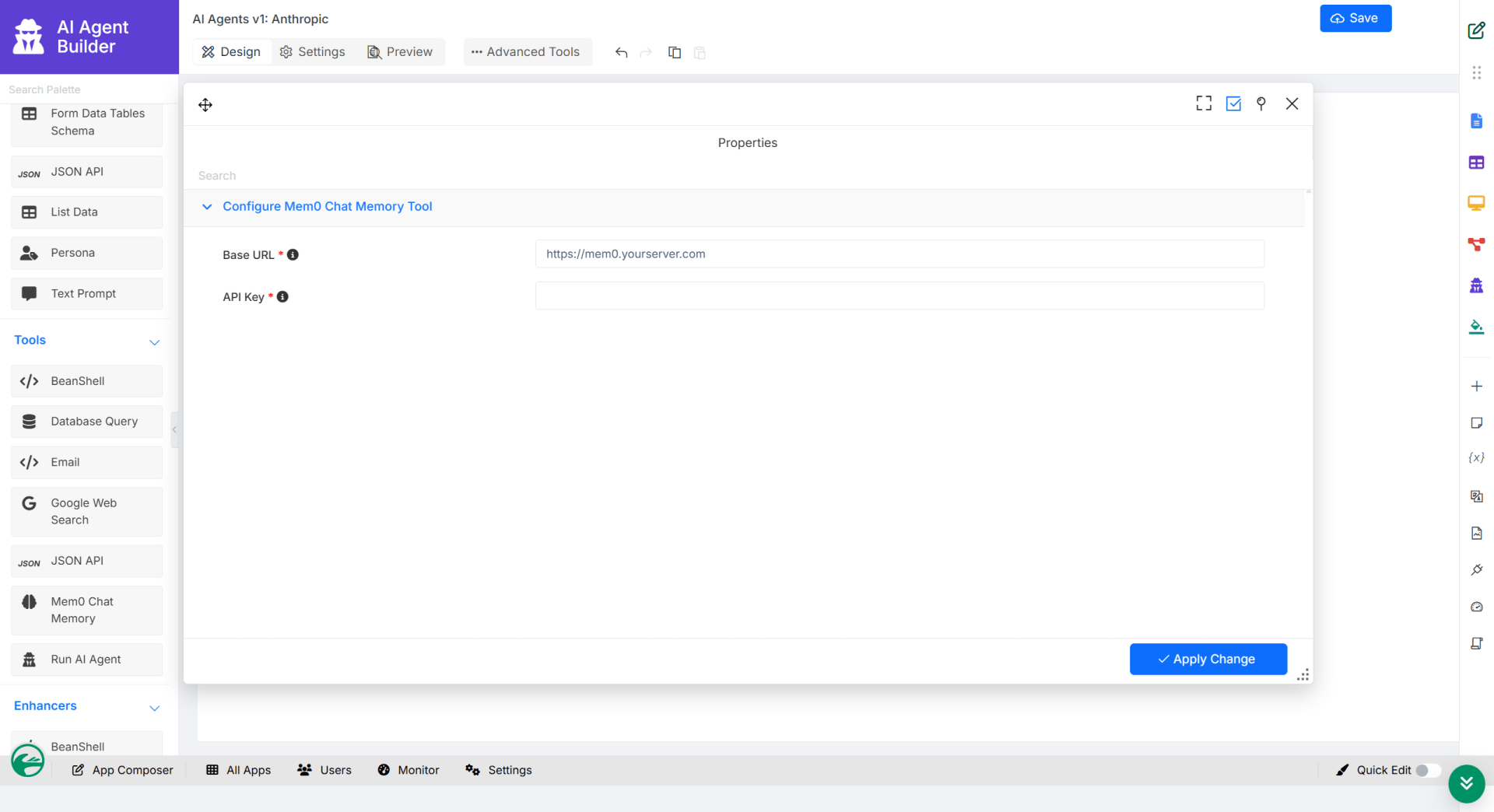
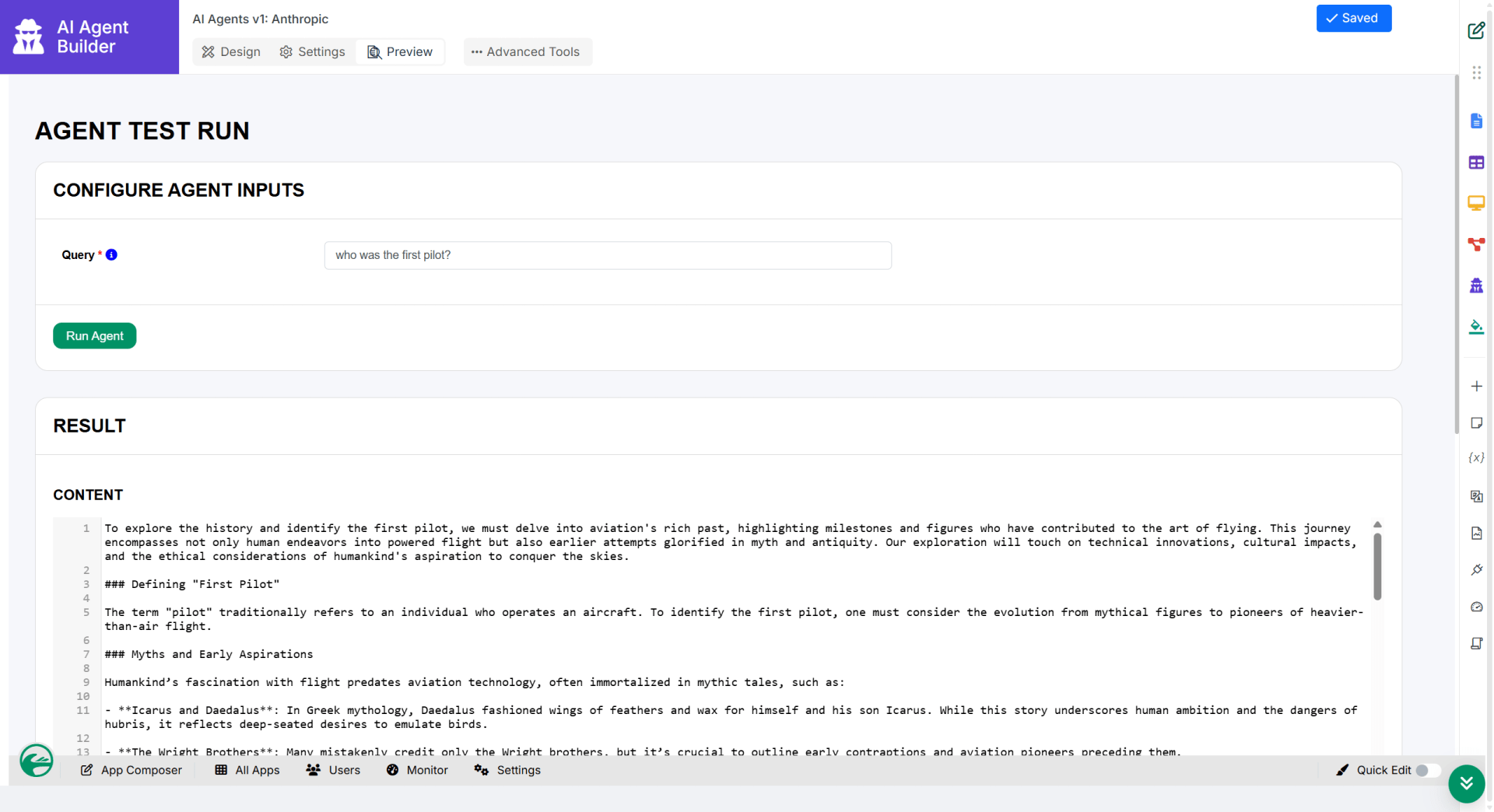
- AI Agent Builder to create autonomous AI agents that can monitor, trigger, and manage business processes, with human oversight.
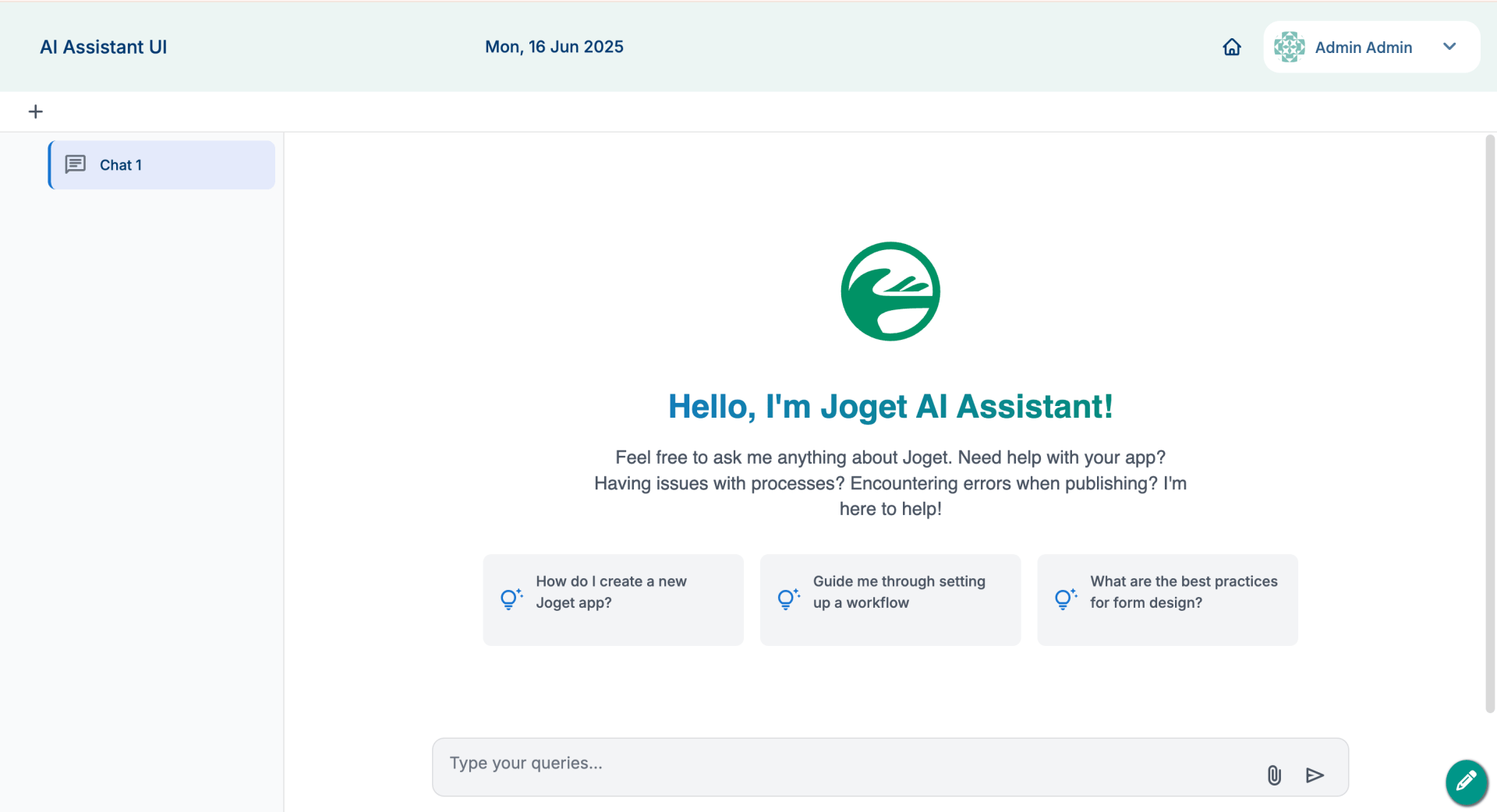
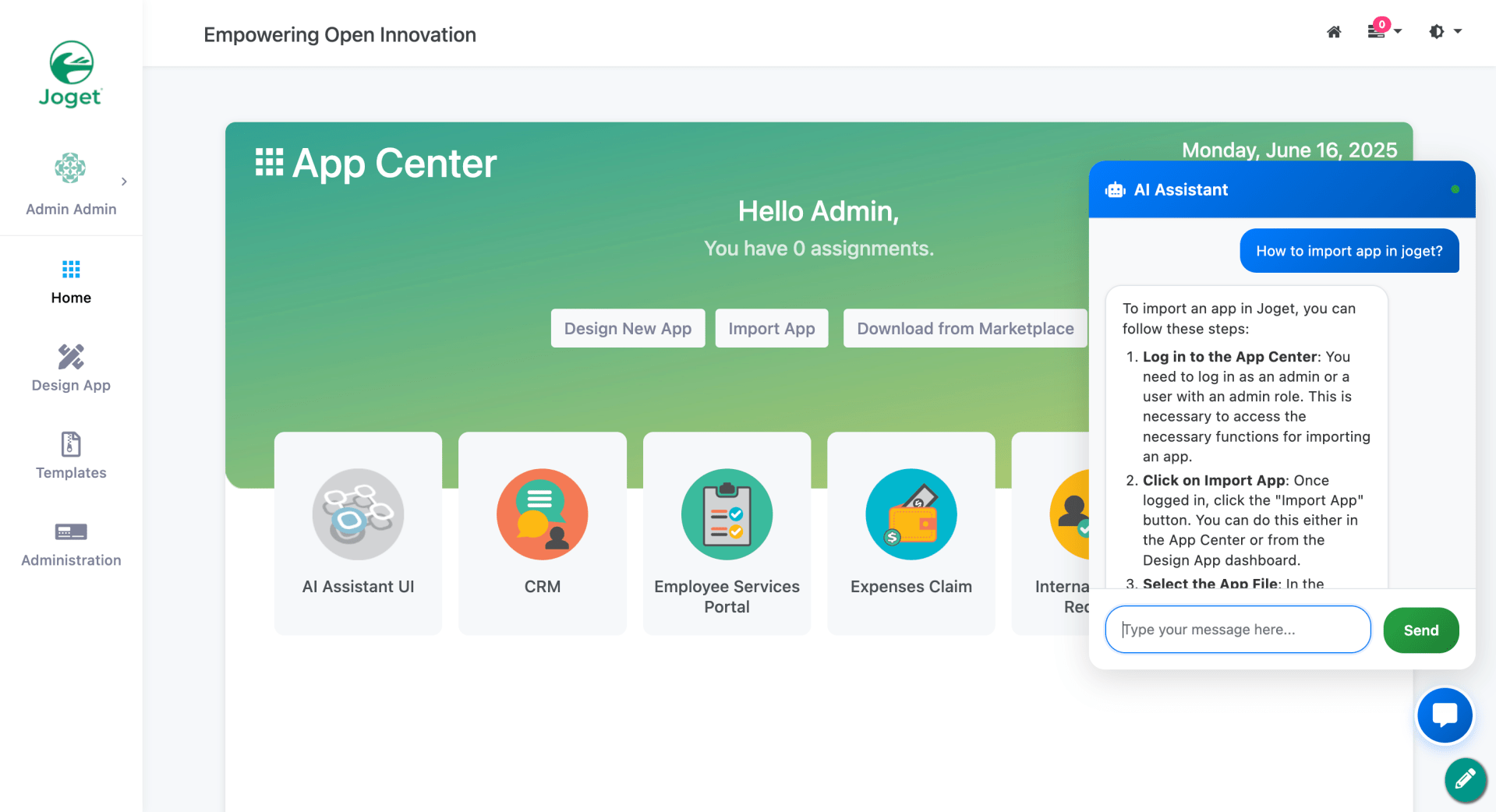
- AI Assistant to get real-time guidance, smart recommendations, and data-driven insights.
- AI Bundle to connect to a suite of practical AI tools, including auto-filling form fields, a writing assistant, and a reusable code snippet builder.
Joget Marketplace
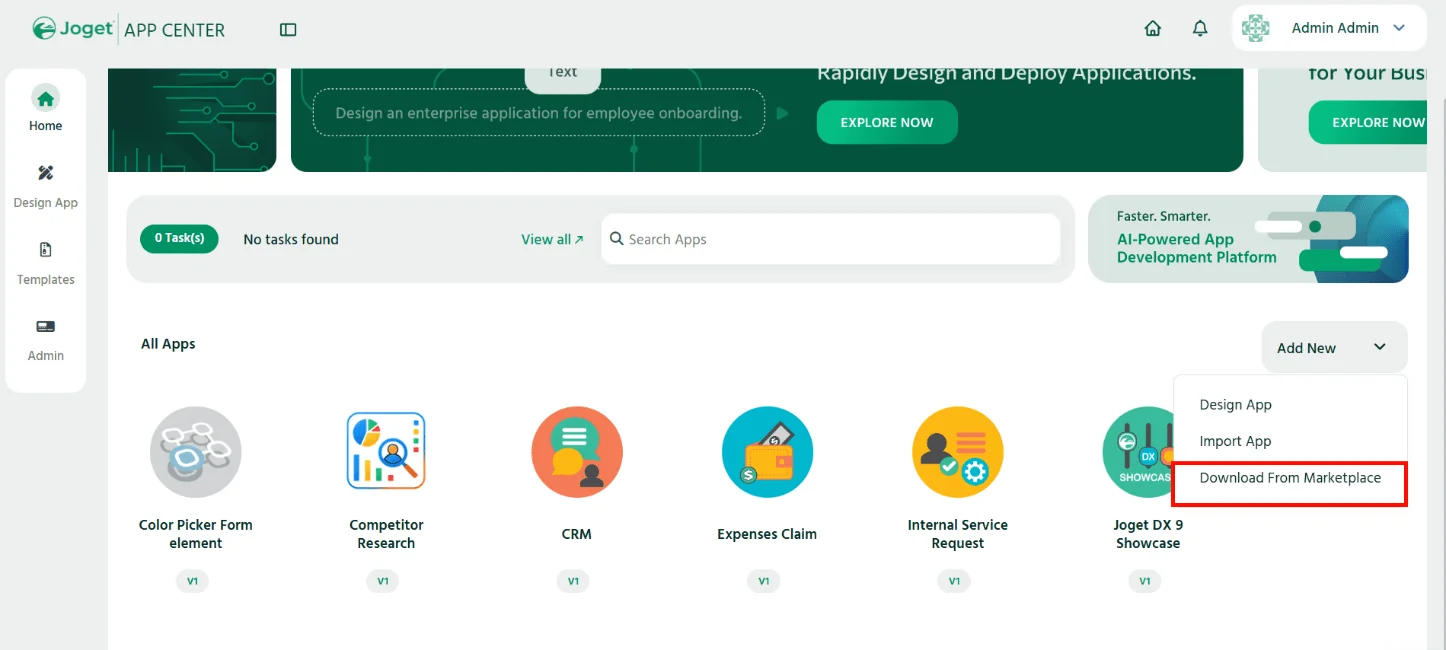
Joget Marketplace is a software marketplace (app store) where ready-made apps, templates, plugins, and partner solutions can be seamlessly installed with the click of a button. These can be used as-is, or can be customized to suit specific needs.
Joget Marketplace New Integration Features in DX 9
- Directly integrates with the Joget Marketplace, enabling users to discover, install, and manage plugins effortlessly from within the platform.
- Link to access Marketplace plugins to discover and install the plugin to use directly after installation.
Visual Builders
Visual drag-and-drop builders are web-based and accessible from any device.
These are the core builders incorporated in the platform:
- AI Designer & App Composer to build apps using the intuitive app composer tool, natural language, docs, or images.
- Form Builder & Form Composer to create and compose forms and screens.
- Process Builder & Process Composer to create and compose processes and workflows.
- List Builder & Datalist Composer to create and compose searchable data screens.
- UI Builder & UI Composer to create and compose navigation menus, UI pages, themes, and permissions.
- Theme Builder & Theme Composer to customize designs to meet the diverse UI requirements, or use the theme composer to describe the look and feel you want, and the composer applies it.
Add-on Builders
Add-on builders can be installed to provide additional functionality, for example:
- AI Agent Builder to build, refine, test, and deploy autonomous AI Agents.
- API Builder to create a custom API with drag and drop capabilities.
- Report Builder to create reports and generate PDF reports.
- API Connector Builder to create reusable API connectors based on OAS documents.
User Management
Joget provides a built-in directory to manage user groups and organizations, as well as integration to authentication and directory standards such as Active Directory, LDAP, SAML, OpenID Connect and Kerberos.
Monitoring
Joget provides built-in monitoring capabilities, including application performance management, process and app monitoring, logging, and audit trails.
Workflow Engine
Joget provides a built-in workflow engine to orchestrate and execute long-running processes designed using the Process Builder. The workflow engine supports advanced process-related requirements, including multi-level approvals, system and human tasks, synchronous and asynchronous executions, task notifications, deadlines and escalations, sub-processes, decision rules, and service level agreement (SLA) monitoring.
Integration API
Joget offers built-in, simple JSON and JavaScript APIs. The add-on API Builder introduces a visual drag-and-drop approach to design and manage custom APIs that are automatically compliant with the OpenAPI Specification. Integration to external services can be accomplished using industry-standard SOAP XML and REST JSON tools, or via custom plugins.
Plugin Architecture
Joget is designed with a dynamic plugin architecture to be flexible and extensible. Almost every functionality across the platform can be extended by plugins, whether elements in a form, process, or even major enhancements via new add-on builders.
Plugins can be downloaded from Joget Marketplace, extended from existing elements, or custom-developed to meet any requirement. This plugin architecture allows components to be built using code and reused by citizen developers in a no-code manner.
Infrastructure
Joget runs on a multitude of operating systems, databases and application servers so it fits in with any infrastructure (Windows, Linux, Oracle, Microsoft SQL Server, MySQL, IBM Websphere, Oracle Weblogic, Red Hat JBoss EAP, Apache Tomcat, etc).
Joget also offers fully flexible and scalable deployment options, whether on-premise or multi-cloud deployment (On-Demand Cloud, Certified OpenShift Operator, Red Hat Marketplace, Docker, Kubernetes, Cloud Foundry, Google Workspace Marketplace, AWS Marketplace, Azure Marketplace, Google Cloud Platform Marketplace).
Openness and Extensibility
Joget is designed as a truly open platform to fit into any enterprise environment, with an extensible plugin architecture to extend the platform as required. Joget is a mature platform with a commitment to open source and open standards:
Enterprise Open Source
- Core platform is an open source project, available publicly on GitHub. Compared to fully proprietary software, open source software is more transparent and readily auditable. With a larger community participation for faster support and response, it also promotes more ideas with greater innovation.
- The Joget platform is built and fully supported using an enterprise open source With enterprise open source, organizations get the best of both worlds by enjoying enterprise-grade quality and support along with all the community open source benefits.
Open Architecture and Open Standards
- Built on the Java Enterprise Edition (EE) standard, can be deployed on a variety of Java EE application servers such as IBM Websphere Liberty, Oracle Weblogic, Red Hat JBoss EAP, Apache Tomcat, etc.
- Supports any Java-supported operating system e.g. Microsoft Windows, Linux (Red Hat Enterprise Linux, Ubuntu, SUSE), etc.
- Underlying database is vendor independent and can run on a variety of SQL databasesg. MySQL, Oracle, Microsoft SQL Server, etc
- Supports web standards HTML5, CSS3 and a variety of modern web browsersg. Google Chrome, Firefox, Safari, Microsoft Edge.
- Can be deployed in different environments as required e.g. on-premise server, private cloud, public cloud (Amazon Web Services, Microsoft Azure, Google Cloud Platform, etc), Cloud Foundry, Docker, Kubernetes, and Red Hat OpenShift.
Dynamic Plugin Architecture for Extensibility
- Open plugin architecture supporting OSGi for full extensibility and integration.
- Almost every functionality across the platform can be extended by plugins, whether elements in a form, process, or even major enhancements via new add-on builders.
- Plugins can be downloaded from Joget Marketplace, extended from existing elements, or custom-developed to meet any requirement.
- Plugin architecture allows components to be built using code and reused by citizen developers in a no-code manner.
Open Architecture and Open Standards
- Built on the Java Enterprise Edition (EE) standard, can be deployed on a variety of Java EE application servers such as IBM Websphere Liberty, Oracle Weblogic, Red Hat JBoss EAP, Apache Tomcat, etc.
- Supports any Java-supported operating system e.g. Microsoft Windows, Linux (Red Hat Enterprise Linux, Ubuntu, SUSE), etc.
- Underlying database is vendor independent and can run on a variety of SQL databases e.g. MySQL, Oracle, Microsoft SQL Server, etc
- Supports web standards HTML5, CSS3 and a variety of modern web browsers e.g. Google Chrome, Firefox, Safari, Microsoft Edge.
- Can be deployed in different environments as required e.g. on-premise server, private cloud, public cloud (Amazon Web Services, Microsoft Azure, Google Cloud Platform, etc), Cloud Foundry, Docker, Kubernetes, and Red Hat OpenShift.
Dynamic Plugin Architecture for Extensibility
- Open plugin architecture supporting OSGi for full extensibility and integration.
- Almost every functionality across the platform can be extended by plugins, whether elements in a form, process, or even major enhancements via new add-on builders.
- Plugins can be downloaded from Joget Marketplace, extended from existing elements, or custom-developed to meet any requirement.
- Plugin architecture allows components to be built using code and reused by citizen developers in a no-code manner.
Deployment and DevOps
App Deployment and Portability
- Apps built on Joget are web-based, responsive, and accessible from any desktop or mobile device, with automatic Progressive Web Apps (PWA) PWAs offer native-like mobile functionality such as app installation, offline support, background sync, push notifications, and more.
- Apps are also accessible via native mobile apps published in the Apple App Store and Google Play Store.
- Apps are executed directly on the platform, without relying on code-generation. This facilitates faster changes and requires less maintenance without the need to maintain generated code.
- Apps can be easily exported and imported between environments.
- Joget platform can be installed in a variety of deployments, from a single developer laptop to a multi-pod deployment in a large Kubernetes cluster, so apps can be deployed to any of these environments according to requirements.
Version Control and Continuous Integration / Continuous Delivery (CI/CD)
- Supports versioning for both apps and processes, allowing teams to manage different versions of releases.
- Automatic Git integration to manage app definitions and components for better team collaboration.
- Deployments can be automated or performed manually using standard Git commands and also integrated with continuous integration and continuous delivery (CI/CD) pipelines.
- For test automation, Joget apps are web-based, so any test automation framework such as Cypress, Selenium, or Katalon can be integrated.
Monitoring Capabilities
- Built-in monitoring capabilities including application performance management, process and app monitoring, logging and audit trails.
Backup and Disaster Recovery
- Apps and data are stored in an SQL database and shared file storage. Backup and disaster recovery is handled at the infrastructure level, and specific features such as scheduled and incremental backups are capably handled by the actual deployment infrastructure.
Performance and Scalability
Application Performance Monitoring and Alerts
- Built-in application performance monitoring (APM) features that automatically monitors system and application performance. The monitoring is done at runtime, so it works even in actual production environments. Important metrics (e.g., memory usage, system and process CPU loads) can be viewed and monitored in a graphical format over a selected period of time.
- Alerts can be configured for the various metrics, including errors, so that email notifications are sent when thresholds are exceeded. When configured, these notifications provide warnings so that proactive action can be taken before any service interruption is encountered.
- Administrators are able to drill down into response times and throughput by requests for each application.
- Whenever slow traces are encountered, detailed information will be available for troubleshooting, including code-level insights like database query performance and thread profiles. All these allow administrators and developers to identify bottlenecks at runtime as well as during development.
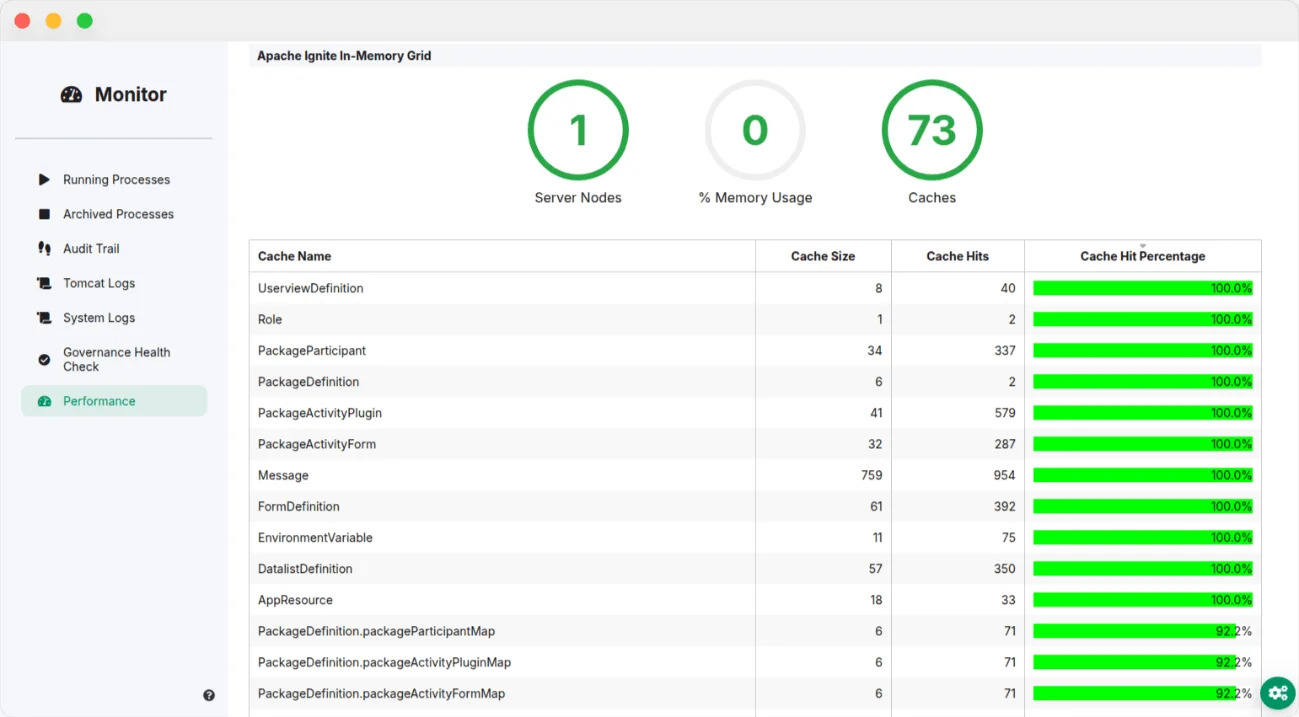
- In-Memory Grid Integration in DX 9 significantly improves application performance by leveraging in-memory computing for faster data processing and reduced database dependency, with direct integration to Apache Ignite.
- The latest DX 9 update of the Usage Visualization in APM allows viewing the details and utilization of the In-Memory Grid via the APM in System Settings.
Performance Analyzer
- The Performance Analyzer is a feature that allows app designers to analyze the performance of their apps and to identify possible bottlenecks. When enabled, the Performance Analyzer identifies elements within an app where the processing time exceeds a specific threshold.
Caching
- Configurable in-memory caching support for large UI pages and large form data using the UI Caching and Form Options Caching
High Availability, Clustering and Scaling
- Designed for scalability, Joget can be installed in a variety of topologies, from a single developer laptop to a multiple-node high-availability cluster.
- For larger-scale deployments, organizations can utilize the multi-tenant Joget Cloud Edition or leverage autoscaling using modern containerization and cloud-native computing by deploying Joget on Kubernetes or Red Hat OpenShift. With the latter, a Red Hat certified operator provides a trusted, secure and automated method to easily deploy and scale apps on a leading enterprise-grade Kubernetes platform.
Asynchronous Request Processing
- Enhances application responsiveness by processing long-running user requests in the background, reducing latency and improving user experience.
Security and Compliance
Platform Security Audits and Compliance
- Core Joget platform is fully open source and publicly available for scrutiny. Open source offers much greater transparency compared to fully proprietary solutions and allows visibility into the source code and inner workings of the platform.
- Each supported edition of the Joget platform is continually audited with Micro Focus Fortify On Demand static application security scans (SAST) to ensure a 5-star rating before every release. Micro Focus is a multi-year leader in the Gartner Magic Quadrant for Application Security Testing, and is compliant with many security standards including FISMA, PCI 3.2, DISA STIG 4.3. This helps to ensure that critical security concerns like the OWASP Top 10 are taken care of at the platform level.
Latest Security Upgrades: Jakarta EE, Spring 6, Hibernate 6
- The platform is now upgraded to the latest enterprise technologies ensuring a secure, performant, and well-supported foundation for years to come.
Authentication and Single Sign-On
- Supports widely used single sign-on (SSO) authentication and directory standards such as Active Directory, LDAP, SAML, OpenID Connect and Kerberos, as well as custom authentication implementations. This simplifies identity management for users, reduces security risks, and helps with compliance with regulations.
- Security Enhanced Directory Manager offers more secure credentials management, password storage and policies. Multi-factor authentication (MFA) and 2FA is also available, with the industry standard Time-based One-Time Password (TOTP) algorithm supported out-of-the-box.
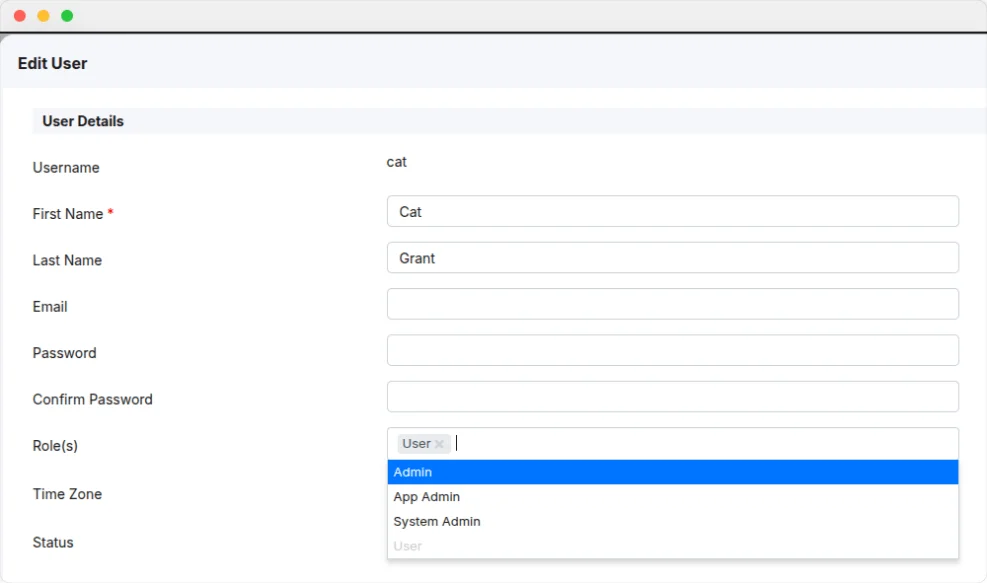
New User Roles
- App Admin and System Admin roles that can only perform app or system-specific tasks, respectively.
Passkeys Support
- Users can now log in as easily as they unlock their modern devices, using biometrics like fingerprints or facial recognition.
- Set up a passkey using WebAuthn, an authentication standard that is supported across all modern browsers and devices.
Flexible, Secure Logins with Identity Provider (IDP) & MFA Options
- Strengthened identity management with support for multiple IDPs and enhanced MFA options for secure user authentication.
- IDP and MFA plugins can be created to support specialized requirements using a pluggable interface.
Platform Access Control
- Joget’s centralized platform addresses the issue of shadow IT and lack of visibility by enabling IT to monitor and participate in the creation of apps by delegating App Designer roles to certain users or groups.
- The Joget platform can be easily provisioned for various business units and environments (e.g. sandbox, staging, production) with its support for multi-tenancy in the Joget Cloud Edition, or by utilizing namespaces in cloud-native Kubernetes environments like Red Hat OpenShift.
Application Access Control and Audits
- For applications built on the Joget platform, users can define fine-grained permission controls depending on requirements to protect the entire app UI (userview), a category, a page, a form, or even a form section.
- For process automation, access controls are mapped to participants in the workflow to ensure appropriate and secure user task assignments.
- For security, audit trails are an important record of system activity to help detect potential security violations and flaws. During development, Joget offers Git integration so all application changes are automatically captured and tracked to be audited. At runtime, application audit trails are also automatically captured.
Secure Data and Encryption
- Supports secure SHA-256 password encryption and offers optional encryption to protect sensitive data.
- Data encryption implementation is pluggable and custom encryption algorithms can be implemented if required.
- Data encryption in transit is secured using the standard HTTPS protocol.
- Data encryption at rest can be implemented at the database level, utilizing features from the underlying database server.
Secure Code Using Plugins
- Plugins can be developed by professional developers to extend the platform in whichever way desired. By utilizing plugins instead of custom scripting or ad-hoc code, Joget allows security-aware professional developers to develop secure components to be used by citizen developers. These plugins can be developed in-house, or published and installed from the Joget Marketplace.
Secure API Endpoints
- Built-in JSON APIs, as well as a more advanced API Builder that offers a visual drag-and-drop approach to expose application data via OpenAPI compliant APIs. Most importantly, these APIs are secure by default, and the API Builder additionally offers simple and extensible customized configuration for secure authentication.
Integration
Built-In JSON and JavaScript APIs
- Simple built-in JSON and JavaScript APIs that allow external systems to access core Joget services e.g. workflow processes, user directory, form and list data.
Custom APIs with the API Builder
- The add-on API Builder introduces a visual drag-and-drop approach to design and manage custom APIs that are automatically compliant with the OpenAPI Specification.
- The API Builder provides greater control and flexibility in creating APIs directly from Joget apps, with access to more APIs, previews, greater API access management, support for custom API authenticators, and more.
- APIs facilitate the use of microservices and composable business applications to compose solutions from smaller components.
External Web Services Integration
Database, Spreadsheet and Email Integration
- Joget can integrate with SQL databases such as Oracle, Microsoft SQL Server and MySQL using standard Java Database Connectivity (JDBC) plugins for forms and lists.
- Built-in tools to import and export spreadsheets and CSV
- Supports email integration using the standard SMTP protocol. IMAP can also be supported, as evidenced in the Approve via Email app in the Joget Marketplace
Directory Integration and Single Sign-On
- Supports widely used single sign-on (SSO) authentication standards and directory services such as Active Directory, LDAP, SAML, OpenID Connect and Kerberos, as well as custom authentication implementations.
Custom Integration
- For additional integration methods, custom plugins can be developed.
- Enterprise integration with MuleSoft Anypoint Platform.
- Event streams integration for event-driven systems with Apache Kafka.
- Robotic Process Automation (RPA) integration with UiPath.
- SSO with Microsoft SharePoint.
- Blockchain and digital ledger technologies (DLT) integration with Hyperledger Fabric, IBM Blockchain Platform, Cardano, and Hedera.
- QR code scanner
Governance
Ready-Made Governance Capabilities for Citizen Development
- Many built-in governance capabilities and guardrails for citizen development.
- Recognizing the importance of citizen development for accelerating digital transformation, Joget has partnered with the Project Management Institute (PMI™) and achieved Gold Tier status in the PMI Citizen Developer™ Partner Program.
Automated Health Check Report and Alerts
- Automated governance health checks and alerts to aid compliance in critical enterprise areas such as security, performance and application quality.
- In keeping with the extensibility of the Joget platform, health checks are pluggable so more advanced or customized governance and compliance rules can be seamlessly installed later.
Monitoring
- Built-in monitoring capabilities including application performance management, process and app monitoring, logging, and audit trails.
Performance Audit
- Performance audits and alerts on the overall health of the apps and platforms to allow developers and administrators to proactively discover potential performance issues.
- Checks for CPU and memory usage, as well as response times and database connection utilization. This will help identify potential bottlenecks and resource leaks.
Quality Assurance Audit
- Overall application and process quality checks to detect unusually high error rates, as well as the data integrity for processes running on the platform.
- Application quality checks for naming conventions, to help improve the maintainability of applications that have been developed and deployed.
Security Audit
- Many built-in cybersecurity features, and also includes security audits in terms of secure user authentication, user interface access, and process participation.
Governance Center
- Governance Center is a centralized portal to manage and monitor Joget installations, apps and developers within an organization.
- Acting as a Citizen Developer Center of Excellence (COE), the Governance Center provides clear visibility into the status of larger-scale citizen development initiatives.
- The Governance Center provides control and approval workflows for new applications, new developers, and app deployments between environments.
- The Governance Center also provides the capability to centrally manage the configuration of plugins to control the confidentiality and access control of data sources.
- As every organization is different, the Governance Center itself is a Joget app so it can be tailored to an organization’s individual requirements.