
Introducing Business Reporting and API Management Addons for Joget DX

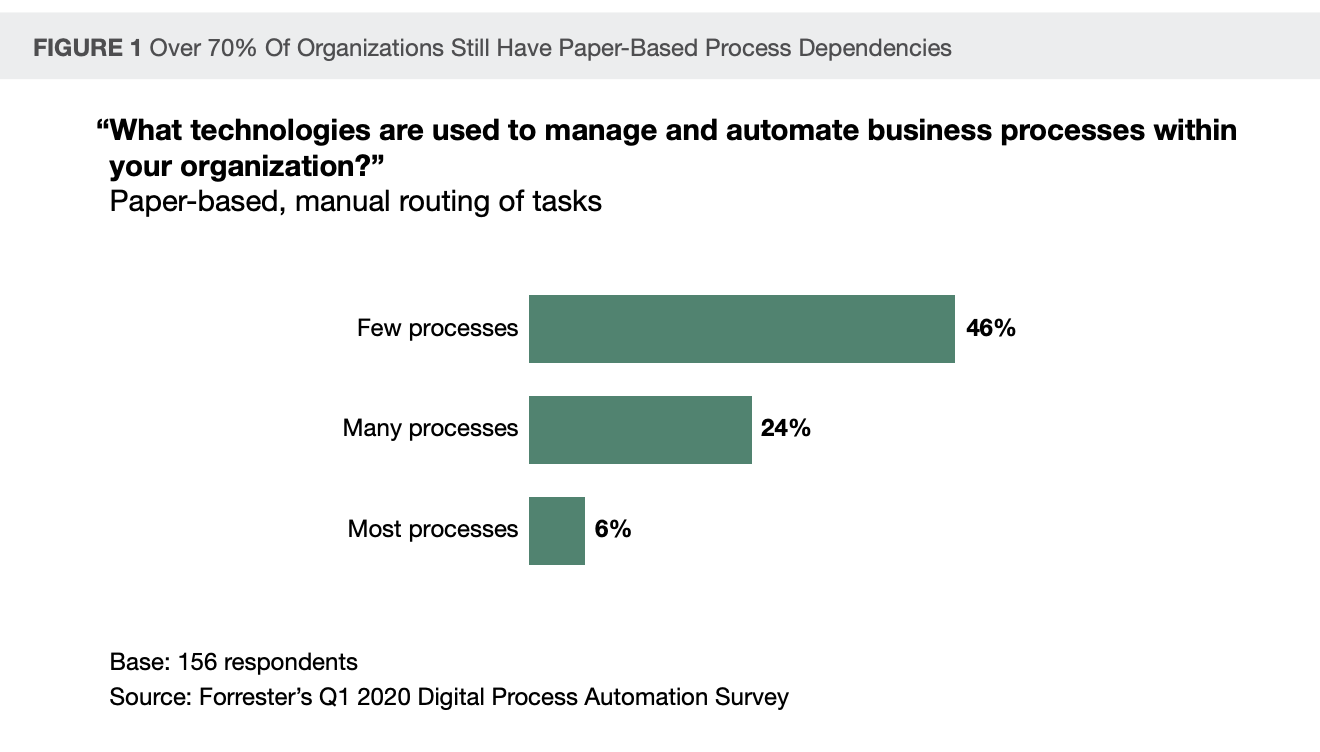
The COVID-19 coronavirus pandemic will be viewed in history as a significant point in human history. In the post-pandemic world, digital transformation can no longer be delayed and organizations need to adapt quickly, or perish, as the old ways of working no longer apply in the new normal. Based on Forrester’s Q1 2020 Digital Process Automation Survey, over 70% Of organizations still have paper-based process dependencies, as shown in the figure below.
With a modern open source no-code/low-code platform like Joget DX, organizations can rapidly build, deploy and adapt applications to cater to ever changing needs. In this article, we will talk about the need for flexibility in application platforms to meet digitalization needs, and how the extensibility of Joget DX enabled the introduction of new add-ons for business reporting and API management.
No-Code, Low-Code and Pro-Code: Flexibility and Extensibility
There might be skepticism about the capabilities of no-code or low-code application platforms to fulfill complex requirements. This leads to frequently asked questions on whether Joget can be used to satisfy a certain requirement or another. In most instances, the answer would actually be a resounding “yes, it’s just a matter of whether it is no-code, low-code or pro-code”.
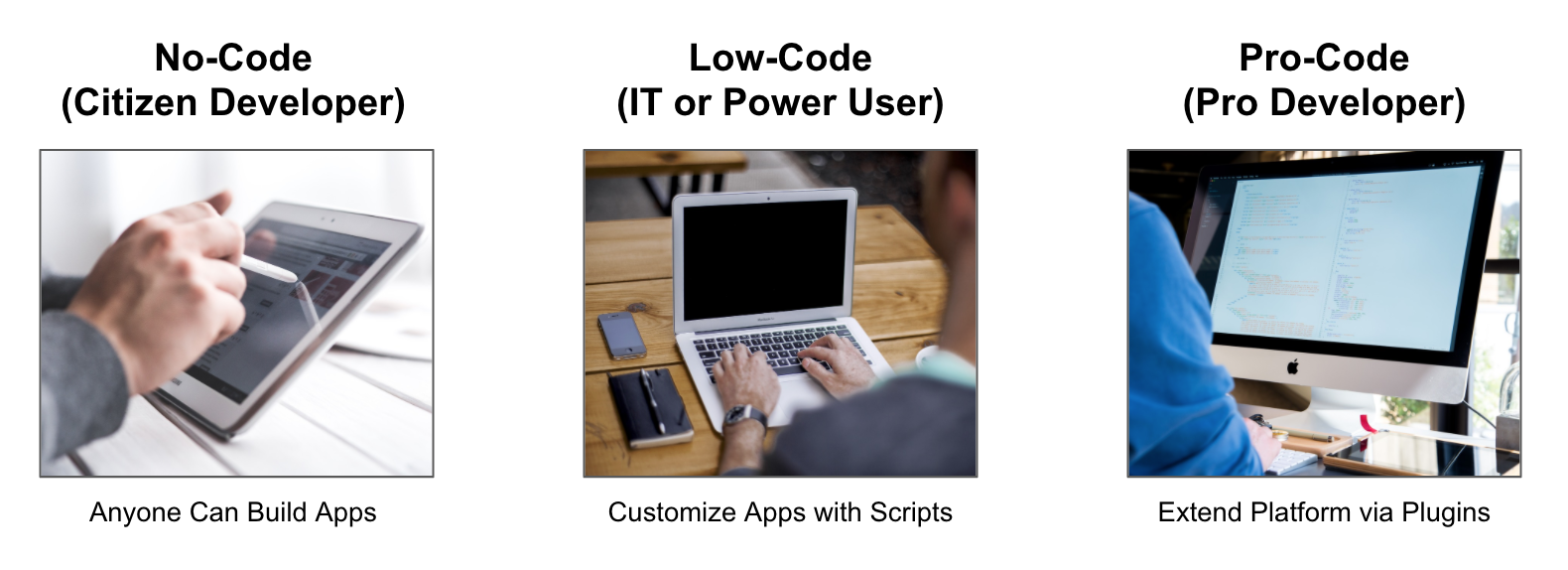
No-Code: Anyone Can Build Apps
A no-code approach works well to empower citizen developers. Gartner defines a citizen developer as “a user who creates new business applications for consumption by others using development and runtime environments sanctioned by corporate IT”.
The Joget platform is designed to cater to different types of business application requirements for citizen developers using a visual drag-and-drop approach. With Joget, it is possible to visually build and deploy a complete workflow application without coding, as demonstrated in this video of a Visitor Registration App built in less than 20 minutes showcasing data management, QR code generation, workflow approval and more.
To kickstart an organization’s citizen development initiatives, the Joget Marketplace provides ready made apps, plugins and templates that can be seamlessly installed. These can be used as-is, or can be customized to suit specific needs.
Low-Code: Power Users Customize Apps
At the same time, it is very important to recognize that there is absolutely no way for any solution to immediately cater to every requirement out there, especially in a no-code manner. Correspondingly, Joget allows IT or tech savvy power users to supplement apps with low-code.
For example, app designers can add a little scripting or coding (e.g. JavaScript, CSS, BeanShell scripts, SQL queries) to customize certain behavior or user experience when built-in functionality or configuration does not support a specific requirement.
Pro-Code: Professional Developers Extend via Plugins
For even more complex requirements, Joget supports pro-code to extend the functionality of the platform via plugins. In this case, pro-code refers to the classic full-code programming that software engineers use to develop software. The Joget platform is designed to be extensible with a dynamic plugin architecture that allows professional developers to build plugins that extend the platform as required.
The fact that the core Joget platform is an open source project hosted on GitHub allows developers to study the inner workings of the platform, and to refer to existing plugin source code, when required.
Plugin Architecture for Extending Functionality
The key to remember is that Joget is a platform, and is designed to be extensible. There’s simply no way for any product to anticipate and cater to every single requirement out there out-of-the-box (no matter what anyone might promise), so allowing pluggable functionality is the only practical solution.
How are Plugins Integrated Across the Joget Platform?
There are more than 18 plugin categories, and almost every functionality can be extended by plugins. The core platform comes with 4 visual builders for the main components of any application – Forms, Lists, Userviews (UI) and Processes.
For example, let’s have a look at the Form Builder.
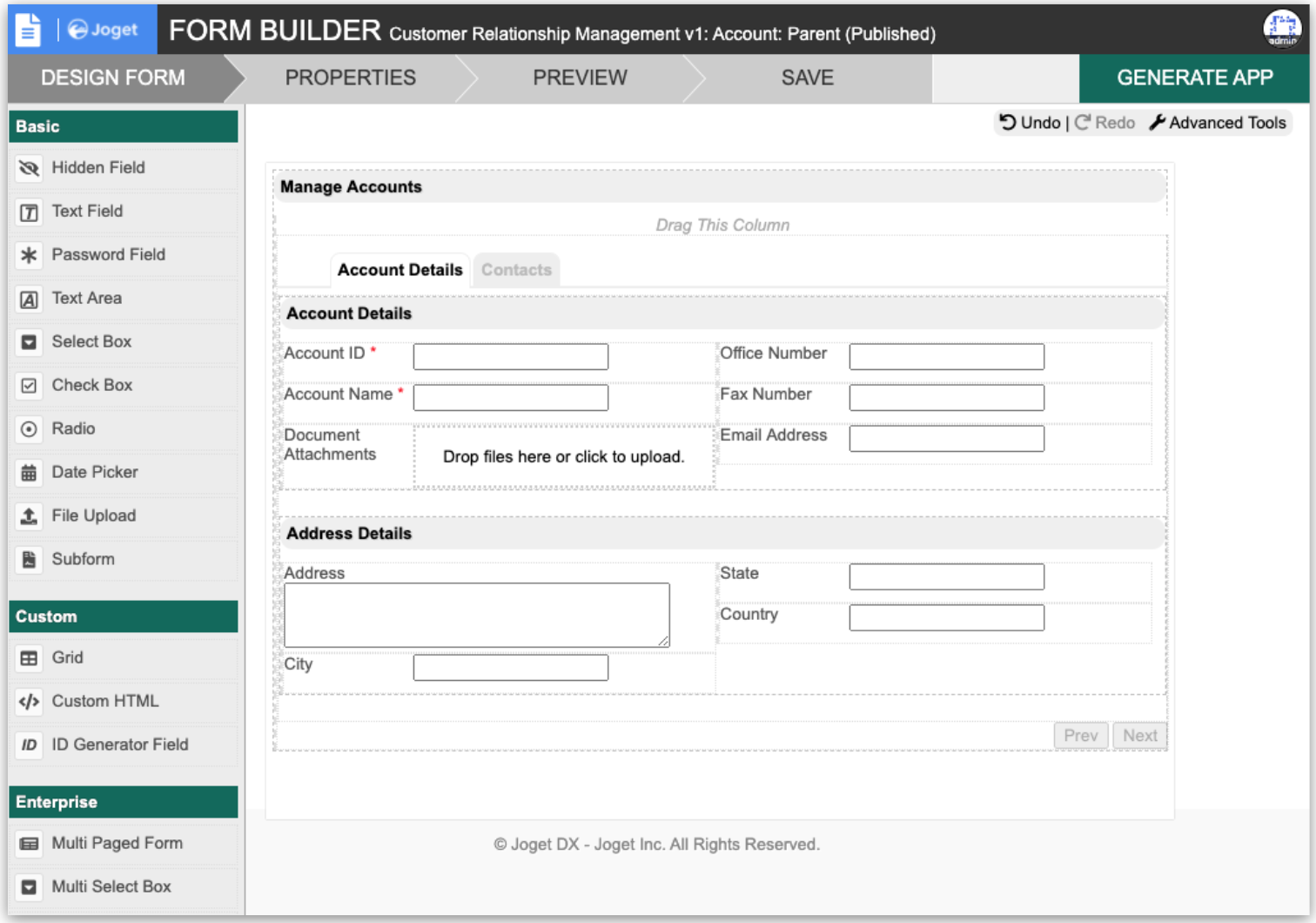
Each available form element in the palette, whether a simple text field or featureful grids, is actually a plugin and you can seamlessly install more from the Joget Marketplace. If you can’t find an element that works exactly the way you want, you can either extend existing ones or develop your own.
The same holds true for not only the other builders (i.e. List Builder, Userview Builder and Process Builder), but other areas across the platform as well e.g. for integration, user management and security.
What are Addon Builders in Joget DX and How Do They Extend Functionality?
In the latest generation of the Joget platform, this extensibility has been taken a step further. Joget DX now supports Addon Builder plugins, which means that new visual builders can be dynamically added to the core platform.
This allows the platform to be extended in near limitless ways, and this has culminated in the release of the first set of Addon Builders to the Joget Marketplace i.e. the Report Builder for business reporting, and the API Builder for API management.
Report Builder for Business Reporting
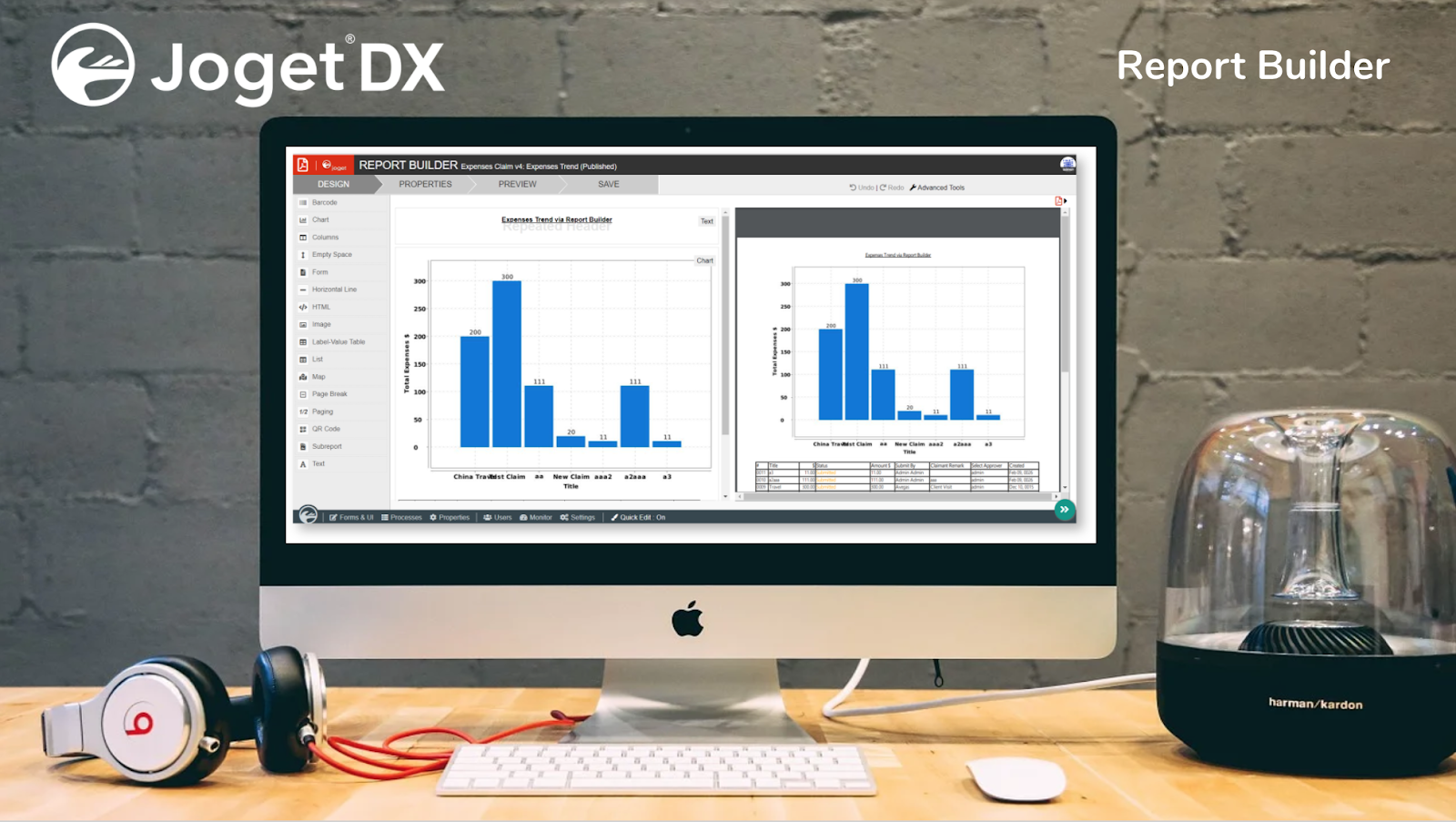
The Report Builder provides a visual drag-and-drop approach to design customized reports with charts, maps, QR codes and more. Joget already supports integration with the popular open source JasperReports reporting library, but this builder provides a seamless experience for users to create reports using a consistent user experience instead of relying on external reporting software.
More information can be found in the Report Builder knowledge base.
API Builder for API Management
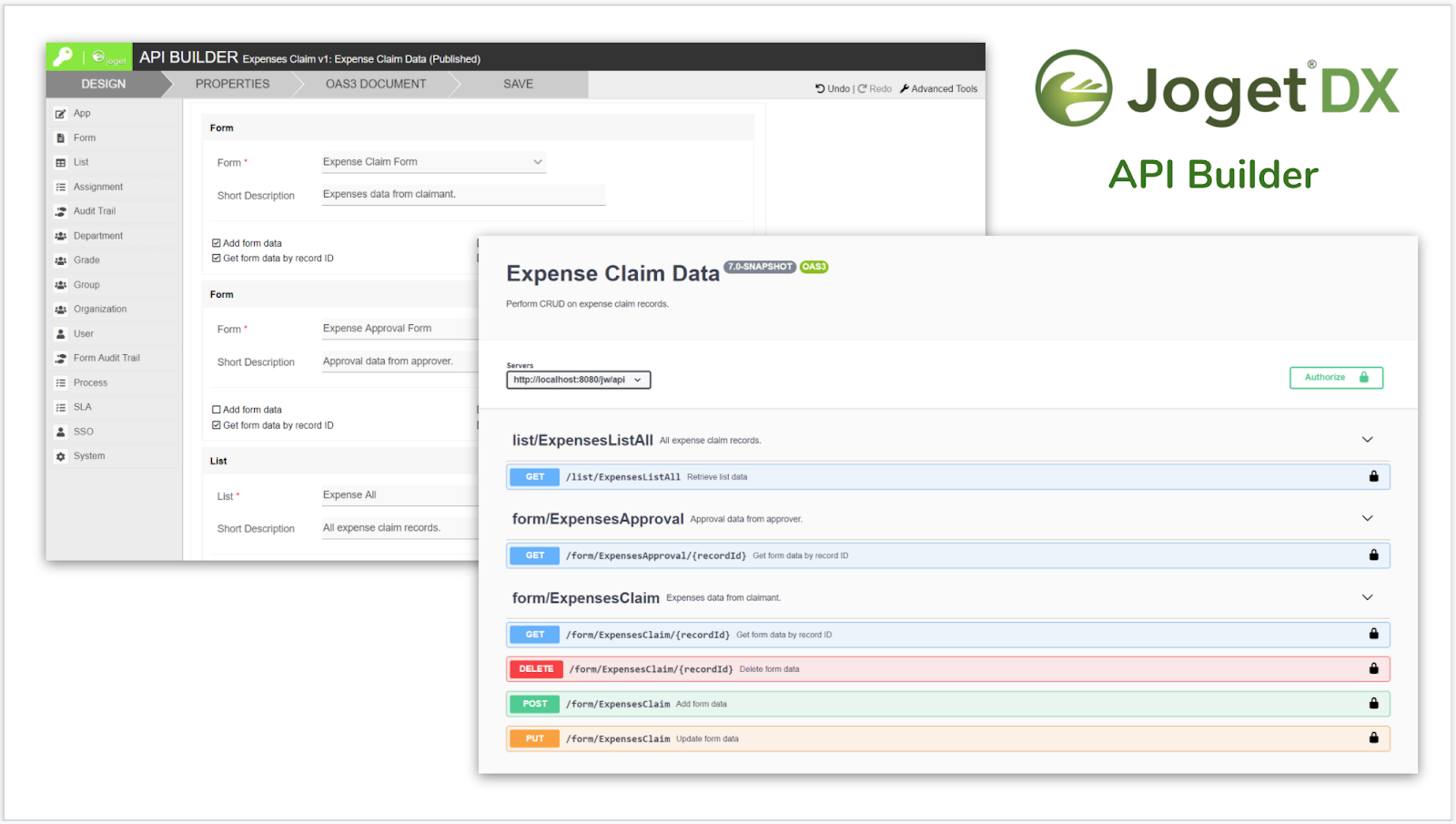
The API Builder introduces a visual drag-and-drop approach to design and manage APIs that are automatically compliant with the OpenAPI Specification (formerly known as the Swagger Specification), which is now the de facto standard for APIs. Joget already provides built-in JSON APIs, but the new builder provides a seamless experience for developers to define and manage customized APIs in a standardized manner.
More information can be found in the API Builder knowledge base.
Finding, Installing and Developing Plugins
Now that we recognize the importance of plugins and extensibility, how do you actually obtain and install plugins on the Joget platform? Simply get them from the Joget Marketplace, or develop your own.
Install Plugins from the Joget Marketplace
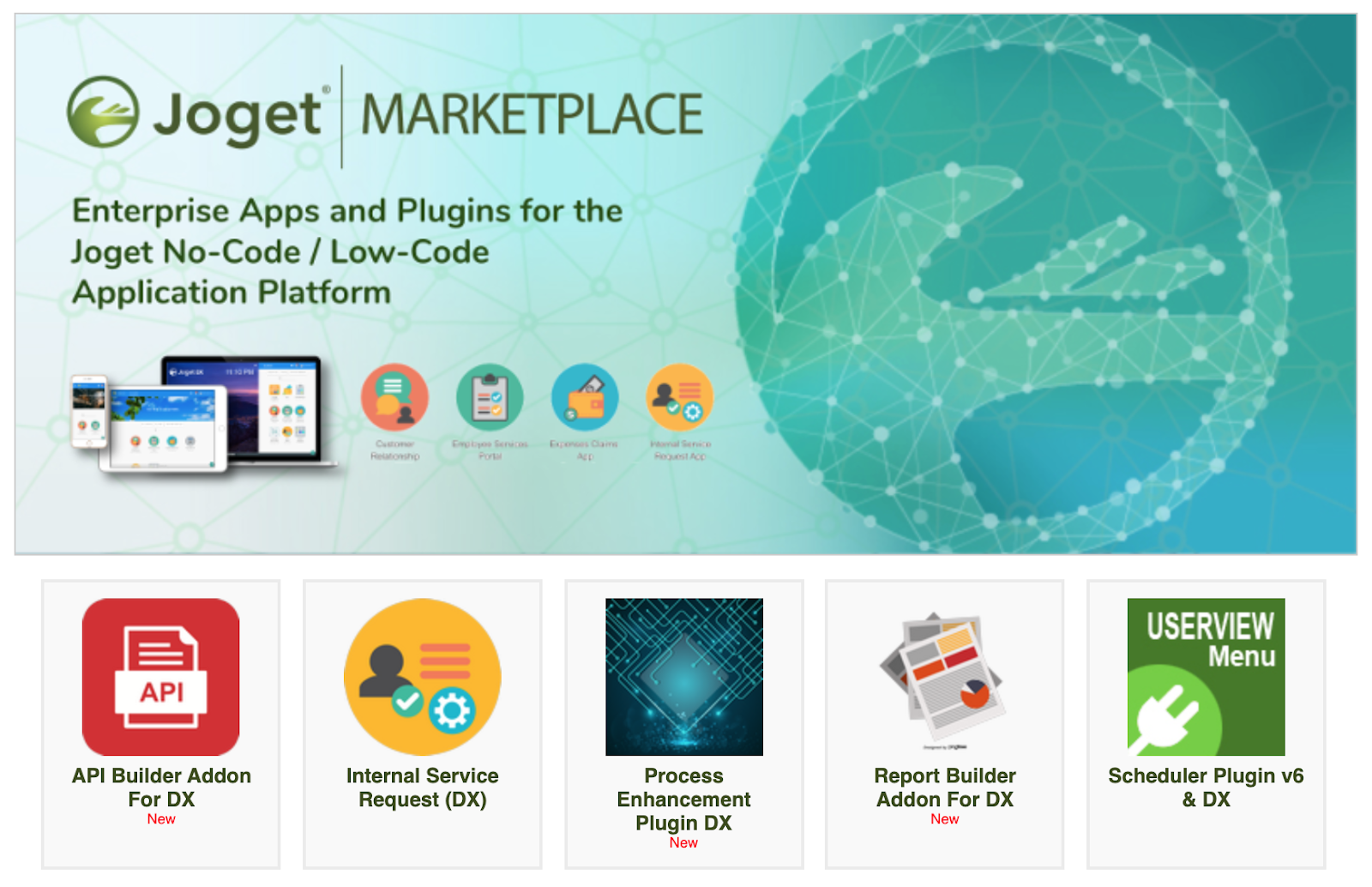
Joget DX supports seamless installation from the Joget Marketplace, so installing a plugin is a matter of browsing to the required plugin and clicking on an install button. The steps are:
-
Login to the Joget App Center as an administrator.
-
Click on the Download from Marketplace button to open the Joget Marketplace.
-
Signup or login to the Joget Marketplace.
-
Browse to the plugin you wish to install.
-
Click on the Install button on the top right corner and click OK to confirm.
Develop Your Own Plugins with Tutorials in the Knowledge Base
If you have custom requirements and cannot find the appropriate plugins in the Joget Marketplace, you can develop your own. To start, refer to the Developing Plugins page in the Joget Knowledge Base.
There are also many tutorials and examples to learn from, for example:
The source code to the core plugins are available in the open source project, so you can also study and extend existing plugins without reinventing the wheel.
Get Started with Joget
Whether for data-driven CRUD (Create-Read-Update-Delete), workflow management, process automation or integration, Joget supports full fledged end-to-end applications for cloud and mobile. Joget DX also introduces many new innovative features in Progressive Web Apps (PWA), application performance management (APM) and artificial intelligence (AI).
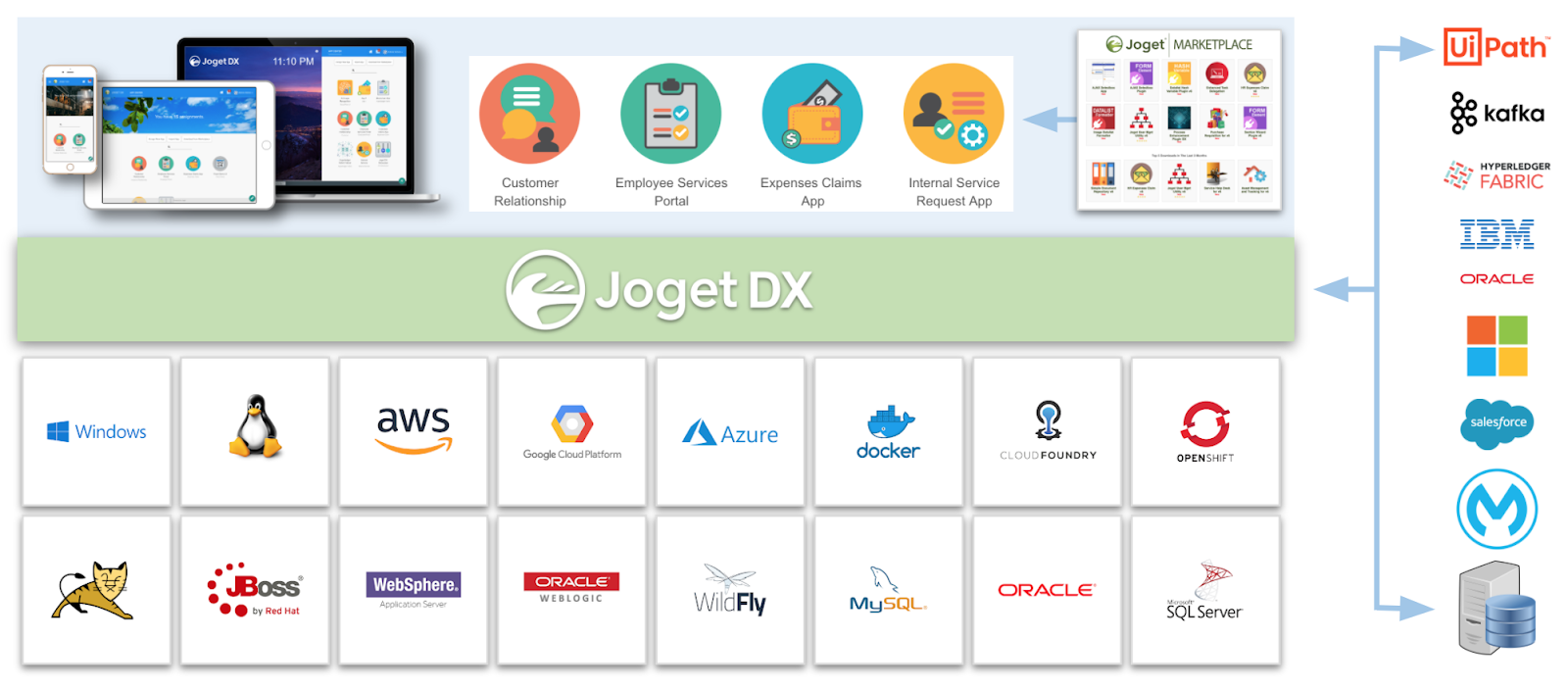
Get Started with Joget DX – Many deployments options are available: On-Premise, On-Demand Cloud, Certified OpenShift Operator, Red Hat Marketplace, Docker, Kubernetes, Cloud Foundry, G Suite Marketplace, AWS Marketplace, Azure Marketplace, Google Cloud. There is a free tier that comes by default so you can get started quickly for free.
Other resources to help you get started:
-
Video Tutorials – Quick overview and build your first app.
-
Knowledge Base – User and developer reference, samples and other documentation
-
Community Q&A – Ask questions, get answers, and help others
-
Joget Academy – Self-paced online learning and certification
-
Joget Marketplace – Download ready made apps, plugins, templates and more
-
Language Translations – Translations for more than 20 languages
Free Joget Academy Vouchers
In light of the current coronavirus pandemic, the Joget team would like to help organizations get started quickly on their digital transformation journey so we are offering free vouchers for Joget Academy courses and certifications. Redeem your FREE Joget Academy vouchers by submitting the Contact form and we will follow up on your request with the vouchers within 2-3 business days.
Stay safe, everyone!
Last modified: June 17, 2026


Latest Articles
September 4, 2026 | Joget, Inc.
Lesotho Launches National Farmers Portal, Giving Every Farmer a Place in a Single Digital Registry
The new registration system, built on Joget DX Enterprise, brings farmer and land information together across all 10 districts, giving…
ReadSeptember 3, 2026 | Joget, Inc.
Joget Introduces Agent Lab, a Program Helping Businesses Build AI Agents Without Code
New community initiative invites businesses to submit real workflow challenges for a free, expert-built AI agent, with selected builds shown…
ReadAugust 13, 2026 | Joget, Inc.
