
A report by Boston Consulting Group (BCG) reveals that 75% of C-level executives list AI and Generative AI (GenAI) among their top three strategic priorities for 2025.
Meanwhile, Deloitte’s foresight analysis suggests that, even in the most cautious projections, GenAI will become an integral part of nearly every company’s digital infrastructure by 2027.
Generative AI, the Game Changer
Generative AI is changing the game—plain and simple. It’s not just about flashy tech or futuristic ideas; it’s about real-world impact. Businesses are already using it to work smarter, save time, and uncover opportunities they never knew existed.
But what exactly makes it so powerful? In this post, we’ll break down the key stats, facts, and expert insights you need to understand how Generative AI is shaping the way we build, innovate, and grow.
Expert Insights: Generative AI’s Transformative Impact
The world’s leading tech minds agree – Generative AI is here to stay, and its impact is transformative:
Sundar Pichai, CEO of Google, states,
“More than a quarter of all new code at Google is generated by AI, then reviewed and accepted by engineers. This helps the engineers do more and move faster.”
Arun Chandrasekaran, VP Analyst at Gartner, highlights,
“Generative AI has become a top priority for the C-suite and has sparked tremendous innovation in new tools beyond foundation models,”
“Demand is increasing for generative AI in many industries, such as healthcare, life sciences, legal, financial services and the public sector.”
According to Ritu Jyoti, Group VP of AI and Automation at IDC,
“IDC is projecting that generative AI will add nearly $10 trillion to global GDP over the next 10 years. Calculating the value of new investments in GenAI requires building the business case by simulating potential cost and responsible value realization,”
What are Generative AI Applications
Generative AI applications are becoming integral to various sectors, moving beyond simple chatbots to more complex functionalities that enhance business operations. TDWI research shows that 37% of organizations have already built or are planning to deploy generative AI chatbots for customer support applications.
Generative AI Applications Examples:
- GitHub Copilot: Helps developers by auto-suggesting lines of code or even writing functions based on the context.
- OpenAI’s Codex: Can translate natural language descriptions into executable code across multiple programming languages.
- DALL-E: Can generate custom images and graphics based on textual descriptions, aiding in creating unique design elements.
- ChatGPT and Google Gemini: Conversational AI models that generate human-like text, enhancing user interactions and productivity tools.
Generative AI’s Role in Application Development
The adoption of Generative AI in app development is rapidly gaining momentum, with a significant impact on productivity and efficiency. According to a GitHub study, developers utilizing AI-powered tools like Copilot Chat report an 88% increase in productivity.
From a KPMG Study, the benefits of integrating Generative AI:

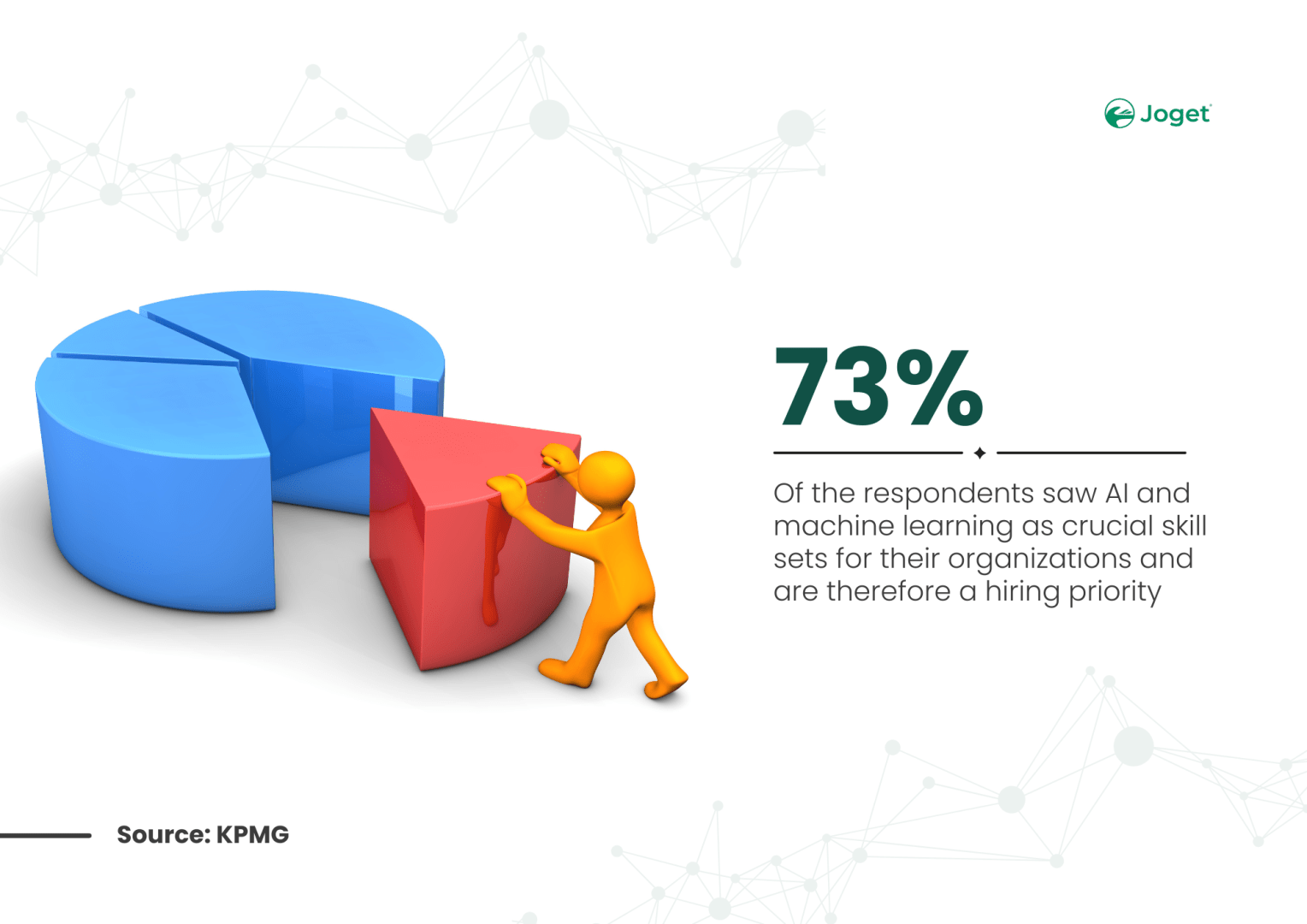
Image Source
How can Generative AI help in Application Development
Generative AI has taken over tasks that once demanded manual effort, becoming an essential ally for developers and businesses. From generating code and designing user interfaces to optimizing testing, AI-driven platforms are reshaping how applications are built.
- Automated Code Generation: GenAI automates coding by generating snippets to full functions, cutting repetitive tasks. TDWI research reports that 30% of organizations have deployed or plan to adopt it, while 46% are exploring its potential tools like GitHub Copilot and OpenAI Codex suggest code snippets, functions, and even entire classes based on the code’s context.
- Enhanced Prototyping and Design: GenAI accelerates design with automated variations and mockups. The Business Research Company reports that the market is set to grow from $0.81 billion in 2024 to $1.11 billion in 2025, showcasing its increasing adoption in design processes.
- Generative AI Application Testing: GenAI automates test case generation, bug detection, and user simulations, reducing costs and time. Leapwork finds that 79% of companies use AI-driven testing, with 64% of executives trusting its accuracy.
How is Generative AI changing software development
Generative AI is taking over the heavy lifting in software development. From automating boilerplate code to generating UI designs and debugging, it’s making development faster, reducing errors, and giving developers more room for creative problem-solving.
-
- Market Growth: The Business Research Company reported that The generative AI in the software development market is expected to grow from $53.4 billion in 2024 to $66.77 billion in 2025, representing a compound annual growth rate (CAGR) of 25%. By 2029, this market is expected to reach $161.34 billion, indicating strong adoption and integration into development processes.

Image Source.
- Developer Adoption: According to Forrester, 49% of developers are either using or expect to use a generative AI assistant in the coding phase of software development by 2025. This reflects a growing reliance on AI tools to enhance productivity.
- Productivity Gains: ThoughtWorks reports that developers utilizing generative AI can experience productivity gains ranging from 10% to 30%. This increased efficiency allows teams to deliver software faster while maintaining quality.
- Economic Impact: McKinsey estimates that generative AI could contribute between $6.1 trillion and $7.9 trillion annually to the global economy by enhancing productivity across various sectors, including software development.
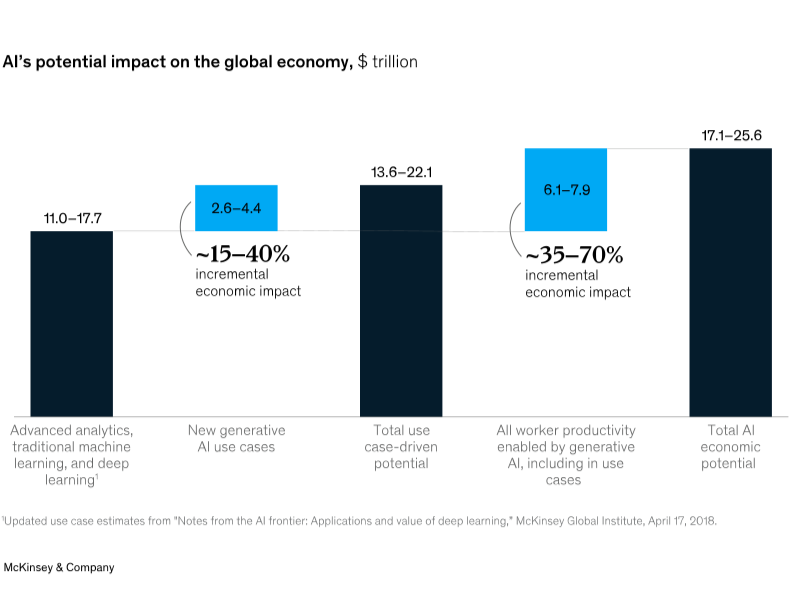
Image Source.
- Financial Investment: A KPMG survey revealed that 68% of organizations plan to invest between $50 million and $250 million in generative AI over the next year, up from 45% the previous year. This significant investment indicates a strong commitment to integrating AI into their operations.
- Budget Allocation: According to Boston Consulting Group (BCG), Generative AI budgets are expected to grow by 60% from 2025 to 2027, increasing from an average of 4.7% of total IT budgets to approximately 7.6% by 2027.
- Revenue Growth: Research from Bloomberg projects that growing demand for generative AI could generate $280 billion in new software revenue, driven by specialized assistants, infrastructure, and coding copilots.
The Future of Generative AI in App Development
By 2026, more than 80% of independent software vendors will have embedded generative AI capabilities in their enterprise applications, according to Gartner. As businesses continue to explore the potential of AI-assisted development, the opportunities to innovate and streamline software creation will only grow.
The message is clear for companies looking to stay ahead: Generative AI is not just a future possibility; it is a transformative force that organizations can leverage today, especially when combined with the agility and speed of low-code/no-code development. These platforms empower organizations to rapidly build and deploy AI-powered applications, making innovation more accessible than ever before.
Discover more about:
Generative AI Capabilities in Joget DX
Trending Reads You Don’t Want to Miss:

What’s Next in App Development: Trends for 2025
Read Article

Low Code Growth: Key Statistics & Facts that Show Its Impact
Read Article
Like this:
Like Loading...
Related