Customer Details
Customer
One of the largest market leaders in manufacturing, healthcare, oil & gas, construction, and more
Industry
Manufacturing
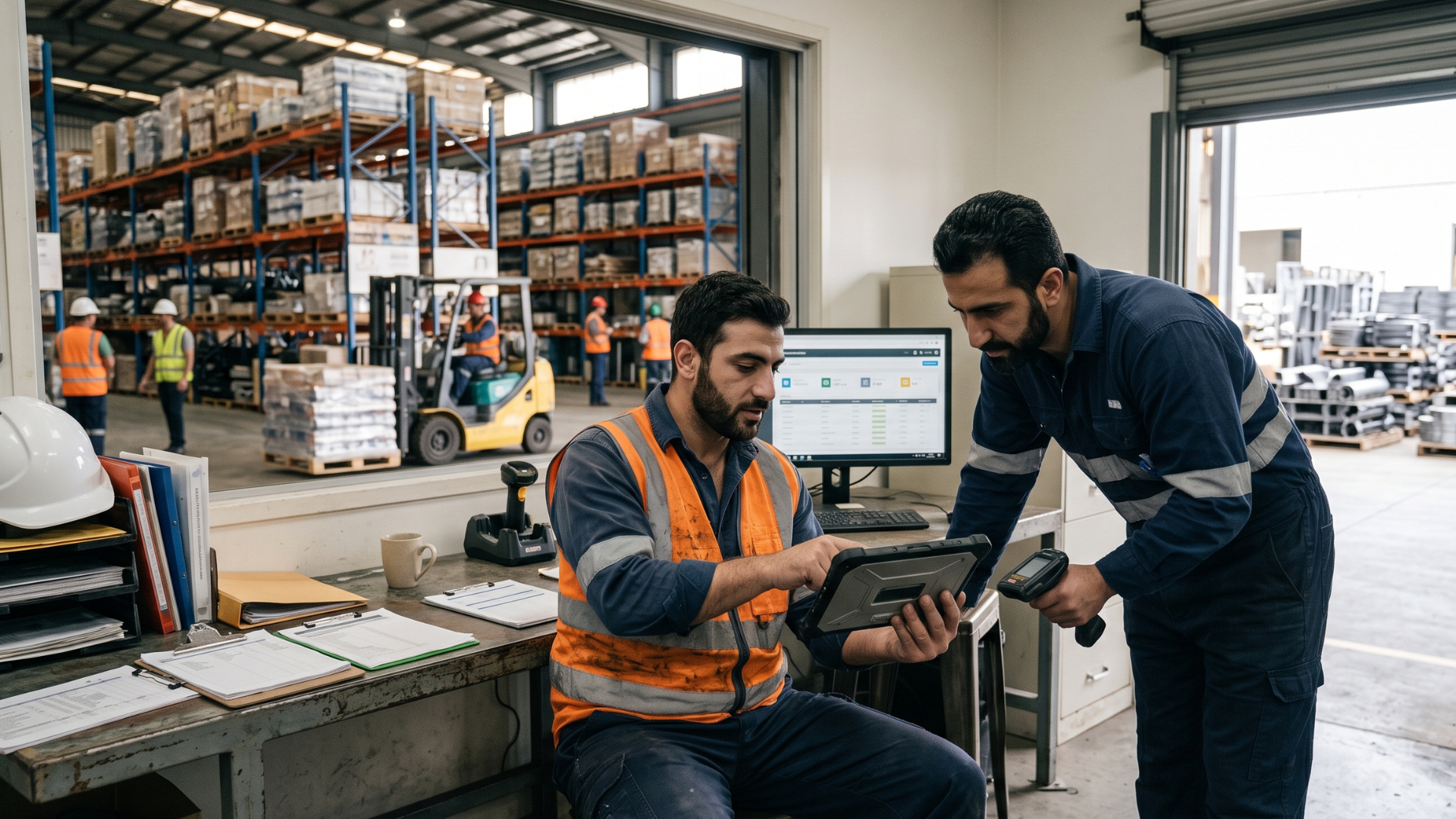
A privately held business group in the Middle East, with more than 10,000 employees, tracked incoming customer orders and the stock movements behind them, material draw-down, intermediate stock, and finished goods, in a system separate from its manufacturing workflow. Production status lived in one place and stock position in another, so confirming whether a job was fully covered by available stock meant manually cross-referencing both. Since the two systems weren’t linked, an update on one side never reflected on the other, and stock movements had to be matched back to production records by hand, which led to rework and delays whenever a mismatch went unnoticed.
The group built a Supply Chain Tracking System on Joget, integrated into the existing manufacturing project so stock and production data sit in one environment. It tracks incoming orders and the stock drawn down or released against each manufacturing job, and syncs with Oracle ERP so figures in Joget stay consistent with the master data without manual reconciliation. Because tracking lives within the same project as the manufacturing workflow, stock position and production status are tied to the same job reference instead of separate identifiers. Anyone reviewing a job now sees stock position and production stage together in real time, manual reconciliation and duplicate entry are gone, and the group has seen fewer scheduling delays and better on-time fulfillment as a result.
Related
 CHALLENGES
Stock and Production Tracked in Separate Systems
- Incoming customer orders and the corresponding stock movements including material draw-down, intermediate stock, finished goods moving out to fulfill those orders, were not tracked within the same system as the manufacturing workflow itself.
- Production status lived in one workflow, while stock position lived in a separate record. To understand whether a job was fully covered by available stock, or where a shortfall might delay fulfillment, someone had to manually cross-reference both sources.
- Because the two weren’t linked, updates made on one side didn’t automatically reflect on the other — stock movements recorded for a job had to be manually matched back to that job’s production record, and vice versa.
- This manual cross-checking added up to considerable rework across the team, and contributed to delays in production scheduling and order fulfillment whenever mismatches went unnoticed.
Related
 SOLUTIONS
Stock and Production Data in One Environment
- A Supply Chain Tracking System was built on Joget and integrated into the existing manufacturing project, so stock and production data live in the same environment rather than as separate workflows.
- The system tracks incoming orders and the associated stock movements including how much stock is drawn to fulfill each order, and how much moves out on completion — tied directly to the relevant manufacturing job.
- It syncs with Oracle ERP, so stock figures recorded in Joget stay consistent with the master data maintained on the ERP side, removing the need for manual reconciliation between the two.
- Because the tracking sits within the same project as the manufacturing workflow, stock position and production status are recorded against the same job reference, rather than needing separate identifiers or manual matching across systems.
Related
 RESULTS
Real-Time Stock Position, No More Reconciliation
100%
Increased visibility
Related
100%
Improved job reviews
Related
IMPROVED
Time-savings with less delays
Related
Stock intake and outflow are now visible within the same system used to track manufacturing progress, so production status and stock position can be reviewed together rather than requiring a separate check elsewhere.
Anyone reviewing a job can see its stock position alongside its production stage in real time, without needing to cross-reference a second source or wait for someone else to confirm stock availability.
Because the ERP sync keeps stock data consistent automatically, the manual reconciliation work that previously followed each stock movement has been removed, along with the duplicate entry it required.
This has led to measurable time savings in day-to-day production tracking, fewer scheduling delays caused by late-discovered stock mismatches, and as a result — improved on-time fulfillment and client satisfaction.