The Rise of Agentic AI: Empowering Businesses with Autonomous Intelligence
Generative AI has been the talk of the town for the past few years, captivating us with its ability to create text, images, and even music from simple prompts. Tools like ChatGPT, Qwen AI, and Nano Banana have shown us how machines can mimic human creativity.
Now, Agentic AI isn’t just emerging; it’s already reshaping the world at lightning speed. Far beyond passive content generation, Agentic AI systems actively perceive, reason, and act with purpose. They autonomously book meetings, manage supply chains, debug code, negotiate deals, and even run entire digital businesses, often without human intervention.
What was once a promising paradigm has become the engine behind the next wave of automation, transforming industries and redefining what it means to collaborate with intelligent systems.
According to Gartner, by 2028, 33% of enterprise software applications will include agentic AI, up from less than 1% in 2024, enabling 15% of day-to-day work decisions to be made autonomously.
Moreover, the global AI agents market size was estimated at USD 5.40 billion in 2024 and is expected to grow at a CAGR of 45.8% from 2025 to 2030, according to Grand View Research. With adoption accelerating, agentic AI is shaping up to be a game-changer, unlocking efficiency, intelligence, and innovation like never before.
This rapid growth reflects the increasing demand for AI-driven automation and decision-making.
____________________
By 2028, 33% of enterprise software applications will include agentic AI, up from less than 1% in 2024, enabling 15% of day-to-day work decisions to be made autonomously.
Gartner
_____________________
What is Agentic AI?
Imagine a system that doesn’t just follow orders but takes the wheel and drives results—all on its own. That’s agentic AI —an emerging intelligent system designed to act independently, make decisions, and solve problems to achieve specific goals.
Unlike traditional AI, which simply reacts to commands or executes predefined tasks, agentic AI steps up to the plate. It breaks down complex challenges into manageable steps, turning a single request into a seamless sequence of actions.
Picture this: while you’re catching up on rest, an agentic AI could be hard at work, analyzing data from multiple systems, spotting patterns you might miss, and even implementing solutions—all without needing a nudge from you.
These systems combine the creative power of large language models (LLMs) with the precision of structured programming, creating a perfect blend of flexibility and reliability. They don’t just rely on static data; they learn from real-time interactions and user behavior, getting smarter and more efficient over time.
What makes agentic AI truly exciting is how it empowers people. Instead of wrestling with complicated tools or workflows, users can simply describe their goals in natural language, and the system takes care of the rest. Whether it’s optimizing supply chains, boosting customer satisfaction, or managing intricate projects, agentic AI operates autonomously to deliver results.
By continuously adapting and refining its approach, it transforms how businesses operate, unlocking new levels of efficiency, innovation, and decision-making capabilities. In short, agentic AI isn’t just a tool—it’s a game-changer for the future of work.
Why Agentic AI is the Latest Buzz
The buzz around agentic AI is well-founded, thanks to its ability to address key limitations of traditional AI and generative models. Here’s why agentic AI stands out:
Flexibility Meets Precision
Agentic AI combines the adaptability of LLMs with the reliability of structured programming. This hybrid approach ensures both intuitive interactions and dependable outcomes.
Real-Time Data Access
Unlike static systems, agentic AI actively fetches real-time data from external sources like APIs, databases, or IoT devices. For example, it can monitor inventory levels, analyze trends, and automatically reorder supplies when stock runs low.
Autonomous Operation
Agentic AI systems handle complex workflows independently, freeing humans to focus on higher-value activities. Whether it’s managing marketing campaigns, monitoring patient health, or detecting cybersecurity threats, these agents operate without constant oversight.
Simplified User Interaction
Agentic AI makes interacting with technology more intuitive. Instead of navigating complex software interfaces, users can simply ask questions in plain language. For instance, a project manager could request, “Show me all completed tasks this month,” and receive a ready-to-use report in seconds. This streamlined interaction saves time and reduces the need for technical expertise.
While standalone LLMs have impressive capabilities, their practical applications in business settings are often limited. Agentic AI bridges this gap by embedding intelligence into real-world workflows, enabling systems to act autonomously and deliver tangible results.
Renowned AI expert Andrew Ng has emphasized the transformative potential of agentic AI, stating that “AI-powered agents capable of autonomously solving tasks will be a major focus in the tech space in the coming years.” He believes this shift will drive even more progress in AI.
How is Agentic AI Different from Generative AI?
While both generative AI and agentic AI fall under the broader umbrella of artificial intelligence, they serve very different purposes:
Generative AI:
Focuses on creating content—such as writing articles, generating images, or composing music. It’s reactive, responding only to the input it receives.
Agentic AI:
Goes beyond creation to perform tasks autonomously. It’s proactive, making decisions and taking actions based on its understanding of the situation.

To illustrate the difference, consider a customer support scenario. A generative AI chatbot might answer questions based on predefined scripts, while an agentic AI system could analyze customer behavior, predict potential issues, and resolve them before they escalate.
Deloitte predicts that 25% of companies using generative AI will begin experimenting with agentic AI in 2025 through pilot projects or proofs of concept. By 2027, Deloitte expects this adoption rate to double, with 50% of companies utilizing agentic AI.
This transition reflects the realization that while generative AI excels at content creation, agentic AI is better suited for driving action and achieving measurable outcomes.
____________________
Deloitte predicts that 25% of companies using generative AI will begin experimenting with agentic AI in 2025 through pilot projects or proofs of concept.
By 2027, Deloitte expects this adoption rate to double, with 50% of companies utilizing agentic AI.
_____________________
Real-World Examples of Agentic AI
Agentic AI is already being used in various industries to tackle real-world challenges. Here are a few examples:
1. Supply Chain Optimization
An agentic AI system can monitor inventory levels, predict demand spikes, and automatically reorder supplies when needed. This ensures businesses never run out of critical items.
2. Smart Home Automation
Imagine a home assistant that adjusts your thermostat, turns off lights, and locks doors based on your daily routine—all without needing explicit commands.
3. Healthcare Diagnostics
In hospitals, agentic AI systems can analyze patient data, flag potential health risks, and suggest treatment plans, allowing doctors to focus on more complex cases.
4. Human Resources and Talent Management
Agentic AI is reshaping talent management by automating key HR processes. AI agents can screen candidates, schedule interviews, and manage employee onboarding, saving time for HR teams.
5. Scientific Research
In scientific discovery, agentic AI has the potential to accelerate breakthroughs. These systems can autonomously design experiments, analyze results, and even propose new hypotheses. For instance, in pharmaceuticals, AI agents could speed up drug discovery by testing thousands of compounds and identifying promising candidates faster than traditional methods.
6. Finance
The fast-paced world of trading and investment is ripe for agentic AI’s capabilities. AI agents can analyze market trends, process real-time economic data, and make split-second trading decisions to optimize portfolios. They can also dynamically adjust investment strategies based on breaking news or shifting market conditions, leading to more efficient markets and potentially higher returns for investors.
These examples demonstrate agentic AI’s versatility and transformative power across diverse industries.
Benefits of Agentic AI
The adoption of agentic AI offers clear benefits that go beyond traditional automation, helping businesses work smarter and faster. Here’s how it delivers value:
Enhanced Process Efficiency and Scalability
Agentic AI optimizes workflows by learning from feedback and refining decision-making over time. For example, in supply chain management, agentic AI can predict demand fluctuations, identify bottlenecks, and recommend solutions—all without human intervention.
Automation of Complex Workflows
Traditional automation tools struggle with intricate, multistep tasks, but agentic AI excels in managing them autonomously. In healthcare, one agent might analyze patient data, while another coordinates scheduling—all within a unified framework.
Performance Scalability
Unlike traditional systems that require manual upgrades during peak workloads, agentic AI scales effortlessly. For instance, during busy seasons, an agentic AI system managing e-commerce operations can handle surges in customer inquiries and optimize delivery schedules without missing a beat.
Quick Response and Adaptability
Agentic AI interprets real-time data, assesses evolving contexts, and adjusts actions accordingly. For example, in logistics, it can detect shipping delays, analyze fluctuating demand, and recalibrate delivery schedules to minimize disruptions.
Supporting Employees Roles
By automating repetitive tasks, agentic AI frees employees to focus on higher-value activities that require creativity, critical thinking, and emotional intelligence. For instance, in marketing, it can handle data analysis and campaign optimization, allowing team members to craft compelling narratives and build customer relationships.
Balancing AI Autonomy with Human Oversight
While agentic AI operates independently, human oversight ensures alignment with organizational goals and ethical standards. For example, human supervisors can review decisions, provide guidance, or address edge cases requiring nuanced judgment. This partnership creates a robust framework where technology amplifies human potential without overshadowing it.

Joget’s Role in Advancing AI
Agentic AI is transforming the way businesses operate, and Joget is accelerating that transformation, making it faster, simpler, and accessible to everyone. Because building, deploying, and governing intelligent agents shouldn’t require a team of PhDs or months of development. That’s exactly where Joget AI Agent Builder comes in.
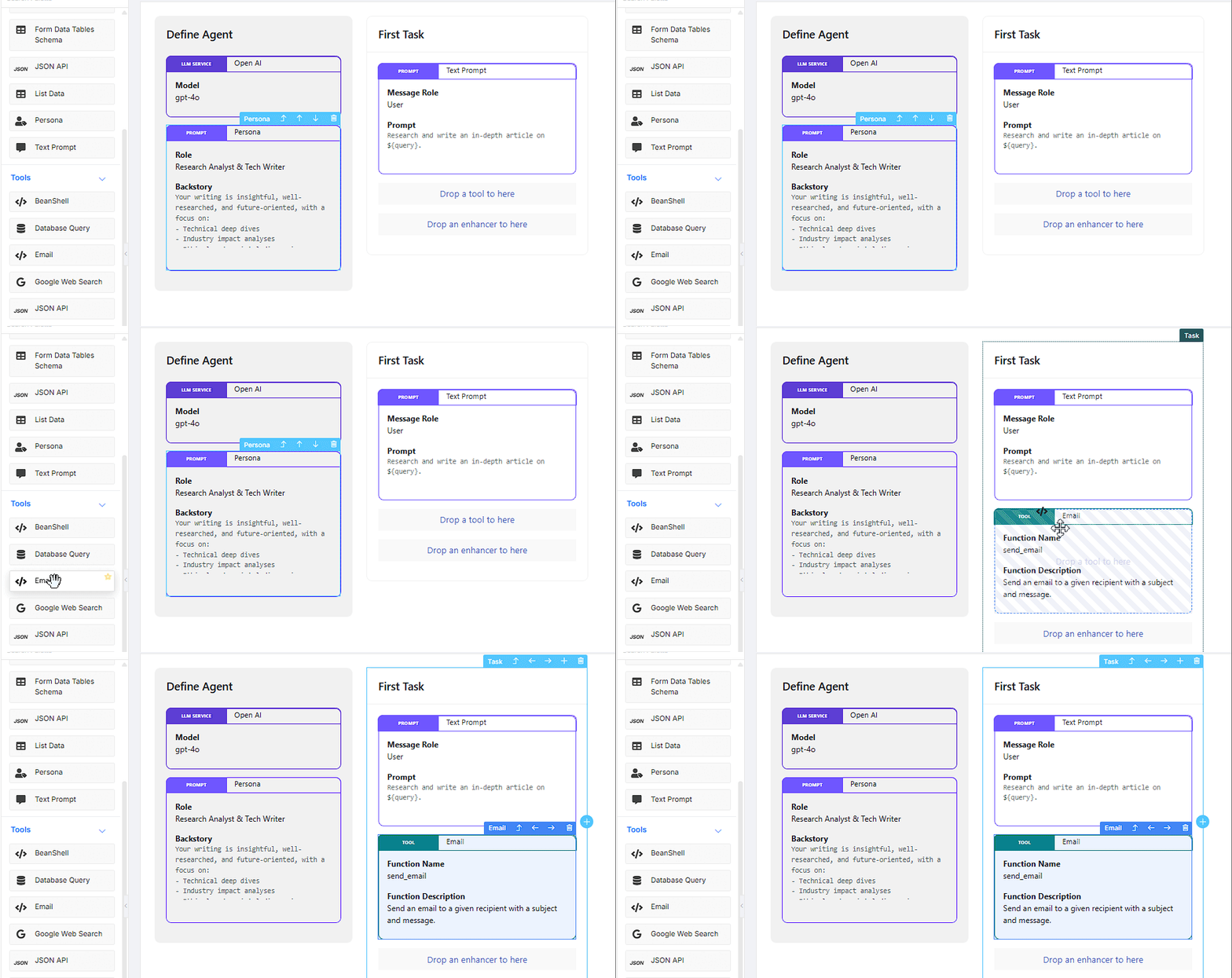
Joget is empowering every team, technical or non-technical, to harness the full power of Agentic AI through an intuitive, no-code/low-code platform. With Joget AI Agent Builder, you can create smart, autonomous agents that act on your behalf across departments: from IT and HR to customer service, finance, and supply chain.
Let Agentic AI work for you, without the complexity.
- Build in minutes, not months: Visually design AI agents with drag-and-drop simplicity. Define goals, triggers, and actions without writing a single line of code.
- Test with confidence: Use the built-in Preview tab to simulate real-world scenarios, debug logic flows, and refine behavior before going live.
- Integrate seamlessly into workflows: Embed AI agents directly into your existing Joget applications using the AI Agent tool, ensuring they operate within structured, auditable processes.
- Keep humans in the loop: Maintain control with human-in-the-loop governance. Agents can propose actions, but critical decisions, like approvals or escalations, remain under human oversight.
Whether you’re automating employee onboarding, resolving customer support tickets, or optimizing inventory replenishment, Joget’s AI Agent Builder lets you deploy adaptable, goal-driven agents that evolve with your business needs.
In a world where Agentic AI is already driving decisions and delivering results, Joget ensures that this powerful technology is accessible, responsible, and ready for real business use—today.
Embrace the Future of AI
The transition from generative AI to agentic AI marks a significant leap forward in how we interact with technology. While generative AI excels at creating, agentic AI empowers us to act, making it a game-changer for businesses and individuals alike.
By understanding the differences between these technologies, exploring real-world applications, and following best practices, you can unlock the full potential of agentic AI. And with Generative AI tools like the ones offered by Joget, getting started has never been easier.
Get Started With Joget
Joget DX : Get started and start building your own enterprise app
with Joget DX now.
Joget Intelligence: AI-powered automation that accelerates productivity.
Joget DX Video Tutorials: Watch the quick overview and learn from the video
tutorials.
Joget DX Knowledge Base: Grow your Joget knowledge with the tutorials, samples
apps, and other documentation reference.
Community Q&A: Ask questions, get answers, and help others.
Language Translations: Contribute to Joget Translations in more than 20
languages.
Joget Academy: Learn online and get certified.
Joget Marketplace: Download ready-made apps, plugins, templates, and more.
Joget Blog: Get the latest insights on the Joget platform.
Related